

The Rise of Micro Events: Trends, Benefits, and Planning Tips


Event marketers and planners are under growing pressure to deliver measurable event ROI while creating more personalized, high-value attendee experiences. This pressure is redefining their approach to event formats. Instead of relying on broad-audience conferences, many are turning to micro events to create focused conversations, stronger engagement, and clearer business outcomes.
Micro events are more targeted, bringing smaller groups together around shared interests, challenges, or goals without the cost or scale of large events.
In this guide, we’ll explore the rise of micro events, trends driving their adoption, benefits, and practical tips for planning successful micro event experiences.
What are micro events?
Micro events are small, focused events aimed at creating more personalized, interactive attendee experiences. Instead of targeting a massive audience, they bring niche groups together, usually around a specific goal, topic, or community.
As Rhonda Payne, CEO and founder of The Flock Theory, puts it:
"Micro events are less a disruption and more a recalibration. They don't signal the end of large conferences or trade shows; they signal their evolution. Micro events aren't replacing mega-events; they're forcing big formats to get sharper, braver, more human, and far more intentional."
Overall, they’re more intentional, collaborative, and specific to attendees' needs compared to big conferences.
Why are micro events more popular today?
Attendees are becoming less patient with one-size-fits-all event experiences and want meaningful interactions before they consider any offer. Below, we’ll explore the key reasons micro events are becoming more popular:
1. Demand for personalized experiences
Many traditional event formats have generic content and agendas that leave attendees feeling disengaged and reluctant to take the next steps. Before committing to partnerships, purchases, or memberships, attendees want a strong impact and opportunities to build real connections.
Micro events make this possible by giving planners the flexibility to curate relevant content and create environments that encourage meaningful interactions with speakers, peers, and brands.
2. Proof of event ROI
In EventsAir’s State of Events report, 61% of planners cite budget constraints as their top challenge, yet only 7% expect a significant budget increase in 2026. Even with tight budgets, planners must meet event KPIs and consistently show measurable growth.
This pushes organizers toward smaller events that are easier to plan, measure, and optimize. Rather than focusing on attendance volume, which can be costly when high, micro events prioritize and clearly show metrics like engagement quality, relationship-building, and high-value interactions.
3. A greater focus on high-value connections
Organizations are increasingly prioritising meaningful interactions over reaching the largest possible audience. While account-based marketing (ABM) has contributed to this shift in B2B, the broader trend is a growing emphasis on creating relevant, personalized experiences for the people who matter most.
DemandGen’s ABM Benchmark survey found that 72% of practitioners use in-person events to engage their target accounts. This reflects a wider move towards events that foster stronger conversations, deeper relationships, and more valuable outcomes rather than simply maximizing attendance.
Micro events naturally support this approach by creating an environment where attendees can engage directly with speakers, sponsors, and peers. The result is more meaningful conversations, stronger relationships, and higher-quality opportunities for everyone involved.
4. Better event technology and scalability
Modern event technology has made it easier to run smaller, high-impact events at scale. Organizers manage registrations, personalize attendee experiences, support virtual participation, and track event data for multiple micro events from event platforms.
With this flexibility, organizations can deliver recurring micro event programs and consistently improve performance without operational complexity across different audience segments, regions, and event formats.

Micro event trends in 2026
The shift towards smaller, more intentional events shows how organizations are rethinking audience engagement, pipeline strategy, and event ROI. Here are five micro event trends shaping event strategy in 2026:
1. The shift from mega conferences to regional events
Large-scale annual conferences are becoming less dominant in recent event strategies. More organizations are prioritizing smaller, regional gatherings that offer shorter travel, more interactive formats, and audiences that are genuinely aligned with the topic.
Forrester’s 2025 State of B2B Events survey reflects this shift, showing that 59% of marketers plan to increase smaller hosted events over the next year. In the same survey, interest in large hosted events declined by 12% year over year.
The need for higher ROI and more targeted engagement is driving this trend. While corporate organizations may replace one large conference with several regional activations, associations, member-based organizations, and other community-focused groups are increasingly using micro events to connect with their audiences more frequently throughout the year.
Rather than relying on a single annual conference, smaller regional events help organisations strengthen relationships, deliver ongoing value, and engage members closer to home.
2. AI-assisted personalization and event strategy
As AI grows more sophisticated, it’s also becoming a practical tool for event planning, especially for speed and personalization. According to EventsAir’s State of Events 2026 report, 72% of event professionals now consider AI valuable or essential to event delivery.
Most adoption is focused on practical operational efficiency rather than full automation. Event marketing leads at 52.4% of use cases, followed by data analysis and reporting at 37.8%, and attendee personalization at 13.2%.
This is especially useful for micro events, where attendee expectations are higher, and personalization has a greater impact. AI can help planners deliver tailored agendas, smarter networking recommendations, and more targeted communication without increasing administrative effort.
However, adoption remains cautious, with 26% hesitant due to a lack of knowledge or expertise. Organizers are still evaluating how to use AI effectively and responsibly, particularly in areas involving trust, accuracy, and attendee communication.
3. Micro event tracks within larger events
As Kimberly Hardcastle-Geddes, President of mdg, explained during a PCMA Convening Leaders session, “what I’d like to challenge event organizers to do is to get a little further down the spectrum where we, too, are creating personalized experiences for our attendees.”
With the advent of mass personalization, PCOs and planners are also restructuring large events. Rather than treating every attendee the same, many conferences now incorporate smaller, curated experiences for specific industries, roles, interests, or relationship goals.
These could be executive roundtables, VIP dinners, private networking sessions, or invite-only industry breakouts. The result isn’t replacing the main event, but driving deeper engagement for high-value attendees, sponsors, and decision-makers.
4. Wellbeing and intentional pacing in design
While hour-long sessions were acceptable previously, attendee expectations have now changed. Many now consider packed schedules, information overload, and back-to-back sessions more exhausting than valuable.
Research from Talent Bureau supports this, showing that 35% of respondents rank schedule length and pace among the top satisfaction drivers. The same research found that 72% of attendees prefer keynote sessions between 20 and 40 minutes.
In response, organizers are designing micro events with shorter programs, smaller rooms, unstructured networking time, and formats built around conversation rather than consumption. Such events are more likely to sustain engagement, improve retention, and create stronger post-event outcomes.
5. Hybrid micro formats
Micro events aren’t exclusively in-person, as they also combine a small in-person group with a curated virtual audience. But unlike traditional hybrid events that simply stream large sessions, these formats aim for active participation on both sides, preserving intimacy while extending reach.
With this model, in-person roundtables, workshops, or dinners can include remote stakeholders in real time without diluting the experience.

Common micro event formats
The right micro event format depends on your goals, audience, and the type of experience you want to create. While some micro events are highly structured, others are intentionally informal, focusing on meaningful conversations, networking, or collaboration. Here are some of the most effective formats to consider:
- Networking dinners and curated experiences: These intimate gatherings bring together a carefully selected group of attendees around a shared interest, industry, or business challenge. Whether it's a hosted dinner, breakfast, happy hour, or local meetup, the focus is on building meaningful relationships in a relaxed environment.
- Roundtables and peer discussions: Facilitated conversations with a small group—typically 8 to 20 participants—centered on a shared challenge or topic. Rather than relying on keynote presentations, attendees exchange ideas, share experiences, and learn from one another.
- Workshops, demos, and hands-on sessions: Interactive sessions where attendees actively participate through collaborative exercises, product demonstrations, or guided learning experiences. These formats prioritize practical outcomes over passive listening.
- Community meetups or local chapter events: Smaller regional gatherings designed to keep members, customers, or local communities engaged between larger annual events. These events strengthen relationships, encourage ongoing participation, and make it easier for attendees to connect close to home.
- VIP executive briefings and leadership roundtables: Exclusive experiences for senior leaders, customers, sponsors, or strategic partners. These often include private dinners, invite-only discussions, or executive briefings that prioritize high-value conversations over attendee numbers.
- Pop-up activations: Short, agile experiences designed to generate awareness around a product launch, industry trend, or timely topic. These events capitalize on relevance and immediacy to engage attendees in the moment.
Benefits of micro events
Adding micro events to your event strategy can improve engagement, marketing ideas, and business outcomes without the scale and overhead of large experiences. Here are some of the major benefits of small, targeted events:
1. Higher engagement and networking
Large events can make it difficult for attendees to move beyond surface-level interactions. With hundreds or even thousands of people in one place, meaningful conversations often compete with busy schedules and crowded networking sessions.
Micro events create a different dynamic. Smaller groups make it easier for attendees to introduce themselves, participate in discussions, and build genuine relationships. Many micro events also include a facilitator or moderator who guides conversations, encourages participation, and helps attendees connect with others who share similar interests or challenges.
This is reflected in attendee engagement. An Event Academy survey of event marketers found community meetups—a micro-event format—saw higher engagement than other event formats at 27.4%.
2. Better conversion and pipeline impact
By cutting out noise and focusing on a specific group with clear intent, micro events facilitate stronger pipeline conversions. While large events are less specific, here, your team identifies and engages directly with interested buyers, members, and customers.
This leads to more qualified conversations, faster follow-ups, and clearer influence on pipeline progression and revenue outcomes.
3. Lower cost and faster execution cycles
Between securing sponsors, finding speakers, and sourcing large venues, event planning timelines can be as long as 12 months for mainstream corporate events. Also, as attendee numbers increase, logistical costs such as venue hire, catering, and production scale significantly.
With smaller attendee numbers, events are easier to plan and execute, enabling faster delivery and quicker return on investment.
4. Easier to scale across regions or segments
The structured formats and small audience sizes in micro events make it easy to replicate them consistently across regions, markets, or customer segments.
That means your organization can grow faster by running multiple tailored events in parallel, without compromising brand identity. Larger events lack this flexibility, usually requiring centralization and significant coordination.

Micro event use cases
Micro events have a wide variety of use cases across industries, including marketing, membership, sales, and engagement strategies. Here are some practical ways organizations are using them today:
1. Account targeting
Micro events are a major strategy for B2B account-based marketing campaigns. Rather than inviting hundreds of attendees to a broad industry event, you can host invite-only executive dinners, leadership roundtables, or workshops for a small group of high-intent accounts.
For example, Aspectus, a communications agency, hosted a networking breakfast to engage high-value accounts like Stripe and Revolut, alongside the flagship Singapore FinTech Festival.
This allowed pointed discussions around regulation, compliance, digital priorities, and operational challenges, and gives the team insight into buyer needs or follow-up opportunities.
Tip: Keep your invite list exclusive and small. A room with 15 highly relevant decision-makers often gives you a stronger pipeline compared to hundreds of less qualified leads.
2. Customer onboarding and experience
After the sale, your interactions with customers should continue for steady, strong relationships, and micro events meet this need in a way that makes your company stand out. Go beyond the standard onboarding process with small training sessions, customer workshops, or product education events to improve adoption and satisfaction.
Zoho, for example, runs regional product workshops, bringing hands-on training directly to users in different cities for focused, interactive learning.
Associations can also use this format to welcome new members, introduce community resources, and encourage early participation.
3. Sponsor activation
Large events and conferences provide sponsors with strategic logo placements, but this doesn’t guarantee meaningful engagement or conversions. On the other hand, micro events allow more personal, relevant interactions between the attendees and sponsors.
These could range from hosted discussions, networking experiences, product demonstrations, or other educational sessions that explain how sponsors’ products or services meet attendees’ needs.
This is similar to how large events such as HubSpot’s INBOUND use smaller workshops, breakout talks, and live demos to create more focused sponsor and partner interactions within a broader event environment.
Tip: Sponsors should contribute to the attendee experience, not simply advertise to the room. Educational sessions, product demonstrations, and problem-solving discussions are more likely to create higher-quality leads than purely promotional sessions.
4. Year-round continuing professional development (CPD)
Concentrating all learning activities and opportunities in a single annual event sets the stage for poor retention. Associations and professional bodies use micro events to deliver ongoing career education throughout the year, so attendees grasp and recall concepts more easily.
Common micro events in this category include certification workshops, regional seminars, virtual expert panels, or short skills-based training sessions repeated within the year.
For example, the SMSF Association’s “In Practice” webinar series delivers monthly peer-to-peer learning sessions for members.
5. Building pre-event momentum
Micro events are one of the best event marketing strategies to build engagement before the event starts. In addition to using common advertising channels, such as email campaigns, you can support your flagship conferences with smaller preparatory events beforehand.
Google I/O Extended uses this approach to build momentum for its annual I/O conference through local meetups where attendees engage with previews and discussions around announcements.
For the micro events, options range from virtual preview sessions or webinars, speaker Q&As, or industry discussions leading up to the main event. The early momentum piques the audience’s interest, fosters familiarity, and encourages registrations.

How to plan a micro event
Despite their size, micro events require attention to every detail for event success. With fewer attendees, every interaction carries more weight and directly impacts outcomes. Below, we’ll discuss how to plan engaging micro events in five straightforward steps:
1. Design for repeatability from the start
Treating all your micro events as one-off builds is time-consuming and introduces bottlenecks into your workflow. Although one-off micro events can deliver strong results when planned and executed correctly, the most effective micro events are usually part of a repeatable program.
In essence, you need to define a core structure that stays consistent across events, while allowing specific elements to change. That way, the next events are faster to launch and easier to manage.
Follow these tips to lay the right foundation:
- Define your standard micro event before building a product or offer
- Separate fixed elements, such as conference agendas or registration, from variable ones, like speakers or location
- Reuse your communication sequences and workflow
- Establish clear naming and folder conventions for consistency across a series
- Build your first event as a reusable template, not a one-off activation
Tip: Running micro events as a repeatable series while rebuilding each setup from scratch can be slow and create consistency issues. EventsAir’s cloning feature duplicates your fully configured event setup, from registration to attendee structure, saving you time in launching micro events without affecting consistency.
2. Curate your guest list
With micro events, your guest list shapes the conversations that follow, engagement levels, and eventual outcomes. Micro events target a specific result, and invitations should reflect the mix of people you need to achieve it.
Ask who exactly you need to accelerate a decision, build a relationship, or unlock a next step, then extend invites based on your answer. Here are a few tips to guide you:
- Define attendee profile by role, seniority, and business context before building your list
- Build invitation lists from CRM or member data using segmentation instead of mass outreach
- Set a strict capacity limit to preserve event quality
- Co-curate with partners, sponsors, or key customers to strengthen group relevance
- Track acceptances, declines, and no-shows to refine targeting for future events
Tip: The right guest mix is what makes a micro event valuable, so broad registration flows can weaken the experience. Use EventsAir’s registration software to build invitation-only flows, tailor access by attendee type, and pre-fill details for known contacts. Integrations with Salesforce, HubSpot, and Microsoft Dynamics also keep attendee data synced with your CRM.
3. Personalize content and experience
Attendees expect tailored content in every part of a micro event, from the agenda to the conversations they are part of.
A generic program repurposed from a large conference won’t meet that expectation. This doesn’t mean rebuilding from scratch, but rather, shaping the event around attendees and making intentional adjustments to content, speakers, and delivery.
Here are a few practical steps to take for more personalized micro events:
- Finalize the agenda after reviewing the confirmed guest list, so the content reflects who is actually in the room
- Personalize invitations and pre-event messages with role context and clear relevance for each attendee
- Prioritize interactive formats like roundtables, panels, and discussions over one-way presentations
- Deliver agendas, reminders, and updates through event apps or targeted channels instead of bulk emails
- Brief speakers with attendee profiles so they can adapt examples and tone to the audience
Tip: Generic messaging can make a focused micro event feel less personal. EventsAir’s communication module lets you send targeted messages based on registration type, session selection, or custom fields. With the EventsAir mobile app, you can also support personalized schedules and engagement features for each attendee.
4. Measure engagement and business impact
Micro events are designed to create meaningful connections, so success isn't always measured by attendee numbers alone. While attendance and engagement metrics are still valuable, qualitative feedback often provides the clearest picture of whether your event delivered value.
Before the event, define what success looks like based on your objectives. Then combine quantitative metrics with attendee feedback to understand what resonated and where you can improve.
Consider measuring:
- Attendance and participation rates
- Post-event satisfaction scores and survey responses
- The quality of networking and conversations reported by attendees
- Repeat attendance or registrations for future events
- Follow-up actions, such as meeting requests, membership renewals, or continued engagement with your organization
Looking at both data and attendee sentiment will help you refine future micro events and demonstrate their value to internal stakeholders.
Tip: Capturing feedback is just as important as tracking attendance. EventsAir makes it easy to collect post-event surveys, monitor engagement, and review event performance in one place, helping you understand not only how many people attended, but how they experienced your event.
5. Use technology to simplify event delivery
While micro events may be smaller in size, they still require careful coordination behind the scenes. Managing registrations, attendee communications, dietary requirements, seating plans, and check-in manually can quickly become time-consuming. The right event technology helps streamline these operational tasks .
Here are a few ways technology can support your next micro event:
- Manage registrations, attendee details, and communications from a single platform.
- Capture important information such as dietary requirements, accessibility needs, and session preferences during registration.
- Simplify check-in with mobile or self-service options.
- Keep attendees informed with automated reminders and event updates via an event app.
- Collect post-event feedback to understand what worked well and identify opportunities for improvement.
Tip: Micro events are designed to feel personal, but delivering that experience requires the right planning behind the scenes. EventsAir brings registration, attendee management, communications, check-in, and reporting together in one platform, helping organizers deliver seamless, high-touch events without relying on multiple tools.
Execute result-driven micro events with EventsAir
EventsAir provides you with the support to run effective micro events without bottlenecks, bringing planning, engagement, and data into one platform. Our features include:
- All-in-one platform: Manage registration, engagement, analytics, and delivery in a single connected system to reduce tool fragmentation and operational complexity
- Event cloning and templates: Launch consistent micro events faster using proven structures
- Smart registration and segmentation: Ensure the right attendees are invited and admitted
- Optimized communications: Deliver personalized messaging across the attendee journey with less manual effort
- Hybrid and virtual delivery: Run hybrid micro formats from the same platform with OnAIR
Run seamless micro events at scale
Micro events offer the best results when they feel personal, relevant, and frictionless. But, without the right technology, event administration and logistics become difficult, especially with increased activity.
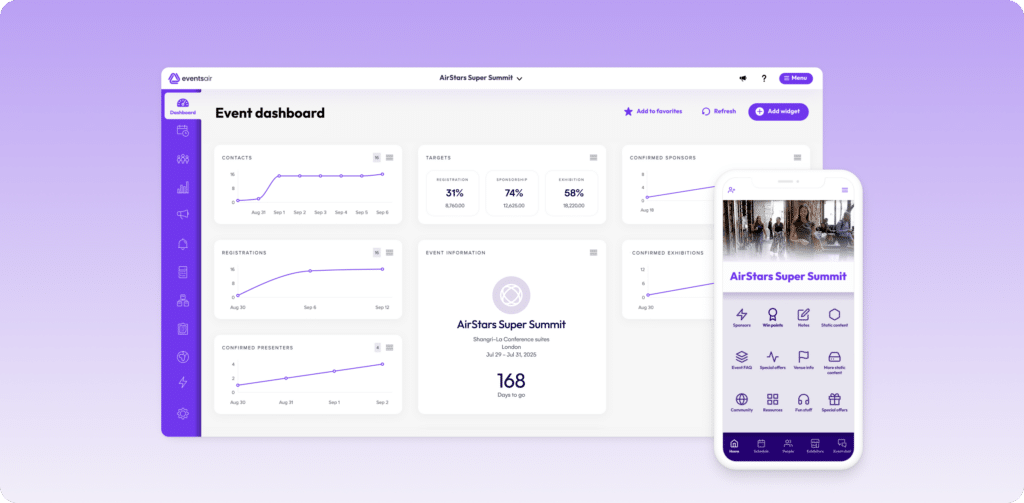
Instead of using multiple tools, EventsAir streamlines your entire event lifecycle into one connected software. From attendee management and engagement to post-event reporting, it lets you coordinate every stage of your micro event without switching between disconnected systems.
Plan and scale high-impact micro events with EventsAir’s all-in-one event management platform. Request a demo to discover how you can deliver tailored, smooth micro events with ease.
See EventsAir in action
Discover why 12,000+ event professionals trust EventsAir to deliver effortless events, every time.


Ready to transform event chaos into clarity?
With EventsAir, you’ll move from chasing logistics to creating unforgettable moments. Plan faster, act with confidence, and deliver exceptional events. Discover what’s possible with a personalized demo today.