

100+ Pre-Event Survey Questions to Improve Attendance, Engagement, and ROI


Planning a successful event starts with understanding your audience. What topics interest them most? Which session formats do they prefer? What would make them more likely to attend?
Think about it like cooking for guests. Before you plan the menu, you usually ask what people like and dislike so the meal meets their expectations. Events work the same way – if you want attendees to leave satisfied, you need their input before the big day.
That’s where pre-event surveys come in. They help planners gather insights about attendee interests, expectations, and logistics, so the event experience can be shaped around what the audience actually wants.
In this guide, we’ve compiled 112 pre-event survey questions across 11 categories to help you collect the insights that matter most. We’ll also show how EventsAir’s attendee and event management tools support survey creation and response tracking in one place.
What is a pre-event survey?
A pre-event survey is a set of questions sent to attendees before an event to gather insights about their preferences, expectations, and needs. Event organizers use these responses to shape key decisions—from event content and networking opportunities to logistics and scheduling.
Many pre-event surveys focus on logistical details, helping planners make informed choices about things like venue setup, catering preferences, seating arrangements, or session timing.
They can also provide valuable insight into attendee motivations and interests. For example, organizers may discover that a large portion of attendees are primarily interested in networking rather than presentations, which could influence the event agenda and programming.
In some cases, surveys also collect background information about attendees, such as their role, experience level, or industry. This helps ensure that sessions, workshops, and discussions are tailored to the right audience.
The exact mix of questions will depend on the type of event you’re hosting and the decisions you need to make before the event begins.
Why should you conduct pre-event surveys?
An event typically ends in one of two ways: it runs smoothly, or it goes very wrong in ways that could have been avoided.
That should answer why pre-event surveys are important. Their main purpose is to make the event as successful as possible and avoid mishaps as much as possible.
But more precisely, here’s what pre-event surveys do that makes them important:
1. They replace assumptions with data
When you’re in the thick of event planning, some decisions may be based on assumptions.
For example, you schedule the more important sessions in the morning because you assume people prefer morning sessions. Or you assume your audience already has a working knowledge of the topic, so you plan the agenda accordingly.
Some of these assumptions will be right because you’re an experienced event planner after all. But when you're wrong, you only find out after the event is over. And by then, it's too late to fix anything.
So, as a first, pre-event survey questions replace your assumptions and help you make or adjust decisions based on data from potential/registered attendees before the big day arrives.
2. They help you make better use of your resources
Organizing events requires a lot of spending. Hiring a venue, booking caterers, securing speakers, arranging production, organizing transportation, and accommodation. Even smaller expenses, when added together, can quickly stretch the budget. Without careful planning and disciplined budgeting, funds can be depleted before the event even begins or before the most critical expenses are fully accounted for.
A pre-event survey can also help organizers allocate resources more effectively. For example, asking attendees about dietary requirements or accessibility needs helps planners work with venues and caterers to ensure the right accommodations are in place.
Surveys can also reveal attendee preferences that shape the event experience. If responses show strong interest in networking opportunities, organizers may add dedicated networking sessions or adjust the agenda to allow more time for informal connections. These insights help planners invest in the areas that matter most to their audience.
3. They reinforce attendee commitment before the event
Sending a pre-event survey can help re-engage attendees in the lead-up to your event. While registration confirms interest, it doesn’t always guarantee attendees are actively thinking about the event weeks or months in advance.
A short survey gives attendees a reason to interact with the event again. It might ask about session interests or preferred discussion topics. This small interaction helps bring the event back to the top of their mind.
It can also strengthen their sense of involvement. When attendees feel their input is being considered – whether it’s shaping the agenda, networking opportunities, discussion topics, or even a welcome function theme – they’re more likely to stay engaged and follow through with their plans to attend.
4. They give you data you can use beyond just this event
The insights from a pre-event survey can inform your event marketing ideas and strategy in the future.
For instance, questions about how attendees heard about the event let you know which of your marketing channels bring more attendees and which are just eating your budget. Similarly, you start spotting a lot more patterns over time, which is particularly beneficial for those who run recurring events.

Pre-event survey questions across 11 categories
Before building your pre-event survey, focus on collecting only the most valuable and relevant information from your attendees. The goal isn’t to ask as many questions as possible, it’s to gather insights that will genuinely improve the event experience.
In many cases, you may have already captured basic details during registration. For example, planners often keep registration forms short to reduce friction during checkout, especially for paid events. A pre-event survey is a great opportunity to gather additional insights once attendees have already secured their spot.
When sending your survey, make it clear why you’re asking these questions and how the responses will be used. When attendees understand that their input can influence the agenda, networking opportunities, or event logistics, they’re far more likely to provide thoughtful responses.
The following categories cover the most common areas event planners explore in pre-event surveys.
1. General attendee background/demographics questions
- What is your full name?
- What company or organization do you represent?
- What is your current job title or role?
- What industry or professional sector do you work in?
- How long have you been in your current role or field?
- Which best describes your level of seniority? (e.g., entry-level, mid-level, senior, executive)
- Is this your first time attending one of our events?
- If not, how many times have you attended before?
- How did you first hear about this event? (social, email, website, referral, etc)
- What motivated you to register for this event?
- Have you attended a similar event hosted by another organisation in the past year?
- How long have you been involved with our organisation or community?
- Which country or region will you be joining us from?
- Which age range best describes you? (18–24 / 25–34 / 35–44 / 45–54 / 55–64 / 65+)
- Are there any other groups or partners that introduced you to the event?
2. Questions around goals & expectations
- What is your primary reason for attending this event?
- What specific outcome or takeaway are you most hoping to gain?
- What challenges are you currently facing that you hope this event might help address?
- On a scale of 1–10, how excited are you about attending?
- What would make this event genuinely valuable to you personally?
- Which session or speaker interests you most?
- If you could leave with just one thing (a skill, a connection, or a piece of knowledge), what would it be?
- Are you attending mainly for learning, networking, or something else?
- Are there any specific goals you have around professional development coming into this event?
- What would a successful event look like from your perspective?
- Is there anything you are worried might not be covered or addressed at this event?
- Are there any workshops or activities you’d like to see?
- How does attending this event connect to your broader professional or personal goals right now?
3. Questions about content & session preferences
- Which planned sessions, workshops, or presentations are you most looking forward to?
- How would you rate your existing knowledge of the main subject matter? (Beginner / Intermediate / Advanced)
- Are there specific case studies, examples, or industries you'd like content to draw from?
- Would you like sessions to include real-world examples or practical demonstrations?
- Do you prefer content that is broadly strategic or deeply technical?
- Are there any speakers, thought leaders, or experts you'd like to hear from?
- What topics do you feel are most overlooked or underrepresented in your industry right now?
- Is there a particular problem or question you're hoping a session will directly answer for you?
- Would you prefer more workshops or more keynote talks?
- What kind of networking activities would you enjoy?
- How do you prefer to receive learning materials?
- Would you want an interactive Q&A session?
4. Questions about logistics & travel
- Will you be travelling from out of town to attend this event?
- How are you planning to get to the venue? (Car / Public transport / Rideshare / Flight / Other)
- Will you need transportation assistance?
- Will you require hotel accommodation near the event venue?
- Would it be helpful if we provided recommendations for nearby hotels or transport options?
- What is your estimated arrival time on the day of the event?
- Will you need parking access at the event venue?
- Are you planning to bring a colleague, guest, or plus-one?
- Do you have any travel or schedule constraints that may affect your attendance times?
- Are the directions and arrival instructions clear?
- How easy is it to find the event location or login info?
- If the event is virtual, do you have reliable access to a stable internet connection?
- Is there anything about the venue location or the surrounding area we should make you aware of in advance?
5. Scheduling & timing questions
- What time of day do you prefer sessions to start?
- How frequently would you like scheduled breaks throughout the day?
- What is your preferred overall duration for the event? (Half day / full day / multi-day)
- If the event spans multiple days, which days of the week work best for you?
- What time are you planning to arrive or log in on the day?
- Would you be interested in optional evening or social programming after the main sessions?
- What departure time do you expect?
- Do you have any hard departure times we should factor into the schedule?
- If there is a time zone difference, which session times would work best for you?
- Would you prefer a single long lunch break or two shorter breaks throughout the day?
- How important is it to you that the programme ends at a scheduled time?
6. Accessibility & special requirements
- Do you have any physical accessibility requirements we should accommodate at the venue?
- Do you require any hearing or visual assistance during sessions?
- Would you benefit from live captioning or sign language interpretation?
- Will you need real-time translation?
- Do you have any dietary restrictions, food allergies, or specific meal preferences?
- Are there any health or medical considerations we should be aware of to ensure your comfort?
- Will you require a quiet or low-stimulation space at any point during the event?
- Do you have any specific seating requirements or preferences?
- Is there anything in our current event design that may create a barrier to your full participation?
- Would you like access to event materials in an alternative format (e.g., large print, digital)?
- Is there anything else you'd like us to know in advance to make your experience as comfortable as possible?
7. Technical support questions
- Are there any tech requirements we should know about?
- Do you need help downloading or accessing any event tools?
- Do you foresee any connectivity challenges?
- How confident are you in accessing online event platforms?
- Any special tech preferences during sessions?
8. Communication/marketing preferences
- Which social media platform do you use most frequently for professional content?
- How do you prefer to receive updates and information about this event? (Email / App / Social media / SMS)
- Would you prefer reminders closer to the event date?
- Do you want pre-event resources or reading?
- What type of pre-event information would be helpful?
- How early should we send event information?
- Have you followed or engaged with our organisation on any social media platforms?
- Would you be interested in following the event hashtag or joining a community group before the event?
- Is there anything about the event that has been unclear or difficult to find information about?
- How likely are you to share information about this event with your professional network?
9. Commitment & follow-up questions
- Would you like to join a post-event follow-up or feedback group?
- Are you interested in volunteering at future events?
- Would you like recordings shared afterward?
- Can we contact you for follow-up interviews?
- Would you attend future events with us?
- Should we plan similar sessions next year?
- Would you like an event recap newsletter?
- Do you want to join our community forum?
- Any interest in event merchandise info?
10. Questions regarding food, comfort & wellness
- Do you have any dietary restrictions?
- Do you follow any specific diet (vegan, halal, etc.)?
- Are there allergies we should plan around?
- Would you like snack options at specific times?
- How important are meal breaks to you?
- Would you want wellness/quiet spaces?
- Do you prefer free-flow refreshments or scheduled meals?
- Are there comfort needs we can help with (rest areas, charging stations)?
- Would you use relaxation or lounge zones during the event?
- Would you attend catered networking meals?
11. Fun or icebreaker questions
- What’s one quirky thing you’d love to find at the event?
- If there’s a photo contest, would you participate?
- What playlist theme should we have for the networking break?
- Do you prefer more surprises or a structured agenda?
Who are the recipients of pre-event surveys?
Pre-event surveys are usually sent to people who have already signed up for the event. They’re often the easiest to survey because you already have their contact details and know they're interested.
You can send them the survey either on the confirmation page itself or through a follow-up email shortly after they sign up. That’s the window when the response rate on surveys tends to be higher because this group is highly engaged and thinking about the event at that time.
In addition, you can also reach out to people who have shown some interest but haven't registered yet.
These are potential attendees, and targeting them with a short survey can nudge them closer to registering. So don’t give up on this group. Even if they don’t register after taking the survey, you have still gathered useful information that will help in the future.
Best practices to boost survey responses
Most people find surveys boring, if not annoying. And honestly speaking, it’s not an interesting activity for people to be enthusiastic about.
Getting people to fill out even the most thoughtful, well-structured survey in the world requires some additional tactics.
And those tactics are easy to implement. Here are the key ones:
1. Keep it short
Surveys balloon in length because everyone involved in planning the event wants to add their questions.
But the issue with long surveys is that only 9% of respondents tend to complete them, according to Customer Thermometer’s research on survey fatigue stats. Some even decline to attempt it when you tell them the survey’s length.
A different survey from 2022 also shows that survey completion rates drop significantly as surveys get longer. Surveys with one to three questions see completion rates around 83%. By the time you hit nine or more questions, that number falls below 60%.
So, to make sure you get a high completion rate, try to include no more than seven or eight most-relevant questions in your pre-event surveys and most other surveys, too.
2. Tell people upfront how long it will take
When someone opens your survey email and has no idea if it's going to take two minutes or fifteen, many of them won't bother finding out.
But if your email says "this takes less than three minutes to complete," they're more likely to click through.
This small thing makes a surprisingly big difference.
Be accurate, though. If you say three minutes and it actually takes eight, people will feel misled. That kind of thing affects whether they bother responding to your next survey, too, i.e., the ones you’re going to conduct during and after the event.
3. Send it at the right time
The best time to send a pre-event survey depends on the type of information you’re trying to collect and how you plan to use it.
If your questions will influence major event decisions – such as agenda topics, session formats, or speaker selection – you’ll need to send your survey well in advance. This gives you enough time to analyze responses and incorporate them into your planning.
For more operational insights – like networking preferences, session selections, or final logistical details – a survey closer to the event can be more effective. At this stage, attendees are more engaged and better able to provide accurate input.
In many cases, a phased approach works best. You might send one survey earlier in the planning process to shape the event, and another closer to the event to refine the attendee experience.
4. Make sure it works on a phone
Most people will open your survey on their phones.
So it should go without saying that your survey must be mobile-friendly. If your survey is made for desktop only and doesn’t fit a phone screen, a huge portion of people will just close it.
So, before you send a survey, test it on the phone and fix anything that feels clunky to navigate.
Create, conduct, and track event surveys with EventsAir
EventsAir is a full-fledged event management platform with built-in attendee management and engagement, robust survey creation, and response tracking features as well. Here are three ways it helps teams to send out and track surveys, including pre-event surveys:
1. Create surveys at every stage of the event
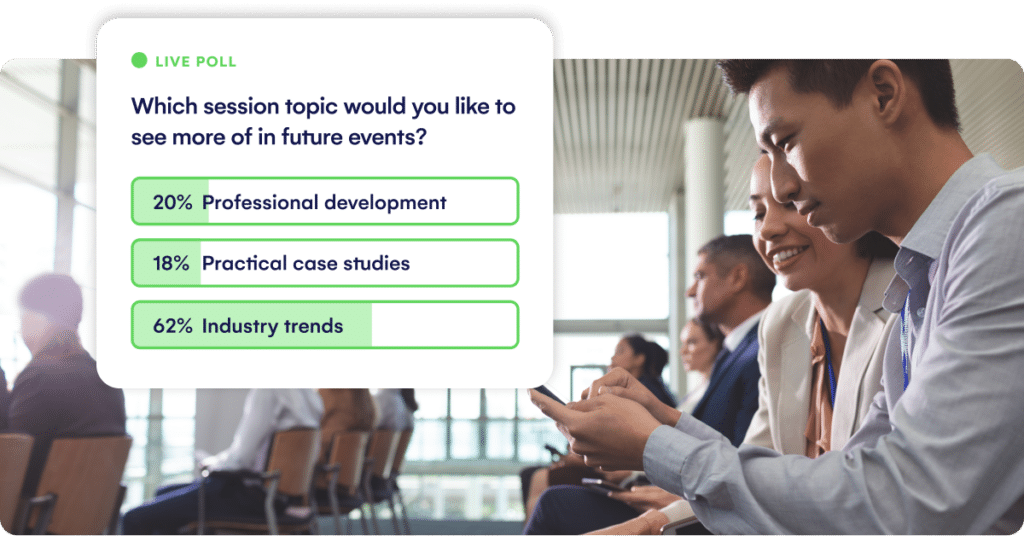
With EventsAir, you can build pre-event surveys in addition to post-event and real-time session surveys, all with the same platform. Attendees can be prompted to answer surveys in the attendee app, making it easy to collect throughout the event and provide feedback while sessions are still happening.
2. Use flexible question formats
The survey builder supports almost all types of survey questions and responses. You can include pre-event survey questions of all sorts, where the recipient is required to either write their answer, select an option, select multiple options, move a slider, or use other response types you can think of.
3. Turn responses into usable insights
Survey results feed directly into reporting dashboards. Instead of exporting data into another tool, you can review responses in-platform and use them to guide planning decisions, adjust programming, or measure audience engagement.
Wrapping up: Elevate your events with better input
Pre-event surveys set your event up for success from the start. They help you understand what attendees expect, shape stronger agendas, allocate resources wisely, and create experiences that feel thoughtful and well planned. When you listen early, the entire event runs more smoothly.
If you want to streamline survey creation and response tracking while managing the entire event lifecycle in one place, EventsAir brings it all together. Request a free demo of EventsAir today and elevate your event survey strategy.
See EventsAir in action
Discover why 12,000+ event professionals trust EventsAir to deliver effortless events, every time.




Ready to transform event chaos into clarity?
With EventsAir, you’ll move from chasing logistics to creating unforgettable moments. Plan faster, act with confidence, and deliver exceptional events. Discover what’s possible with a personalized demo today.