

AI at EventsAir: Building meaningful AI solutions for event planners

We're at an inflection point. AI is evolving faster than most industries can keep up with and event planning is no different. The hype is real, the possibilities are genuinely exciting, and the pressure to do something with AI has never been greater.
But behind the excitement and experimentation lies a much more practical question for event planners:
How can AI genuinely make the work of planning and delivering events easier?
At EventsAir, we believe AI should be approached through the real pressures facing event professionals today. We're not interested in building AI for AI's sake. We're interested in solving real problems – the ones that keep event planners up at night.
The real pressures facing event planners today
Before we talk about what we're building, it's worth naming what's driving the need for it. Event planners today are navigating a challenging set of forces: tighter budgets, rising costs, staff shortages, skill gaps, and ever-increasing attendee expectations. These aren't abstract trends – they're the daily reality of the modern planner. And they're exactly what shapes our approach to AI.
If a solution doesn't align with those pressures, if it doesn't genuinely reduce the load on planners or meaningfully improve the event experience, we won't build it.
Two areas where AI changes everything
We see two major categories where AI can create real, tangible value in event management.
1. Productivity for event planners
Event planning involves an enormous amount of coordination, administration, and data management. From registrations and logistics to communications and reporting, planners often spend a significant amount of time navigating systems and completing repetitive tasks.
AI can help by acting as a planner co-pilot.
Instead of manually navigating dashboards or generating reports, planners can ask questions and receive answers instantly. Rather than working through multiple steps to complete a task, AI can assist with executing it.
Over time, this approach allows planners to shift their focus away from administrative work and toward the strategic and creative aspects of event design.
AI becomes an additional set of hands – or, in an agentic world, as many pairs of hands as needed.
2. Hyper-personalizing the attendee experience
The second major opportunity for AI lies in personalization.
A planner running a 100-person event could, in theory, personally match every attendee with the right session, the right networking connection, the right exhibitor meeting. But this doesn't scale because time doesn't scale.
AI doesn't have that problem. Whether there are 5 attendees or 5,000 or even 50,000, it can deliver the same depth of personalization – curated agendas, smart networking matches, tailored communications – that would be impossible for even the most dedicated team to replicate manually.
This is where AI unlocks something genuinely new: doing what planners want to do but simply can't.
Our three guiding principles
So, how do we go about deciding what to build, and why? At EventsAir, our approach to AI development is guided by three internal principles.
1. Human
AI at EventsAir augments, it does not replace people.
Event planning is a human-centered profession built around relationships, creativity, and experience design. Our goal is to elevate event planners: to give them more capacity, not to sideline them.
This principle has two dimensions. For planners, it means AI handles execution while they retain oversight and final say. For attendees, it means there's always a path to a real human when they need one.
2. Trustworthy
Security and data privacy build the foundation in all our AI development. Attendee data, personally identifiable information (PII), consent: these are things we take seriously, and they require serious investment.
Our work on an upcoming AI feature involved over a month of dedicated security work before we were comfortable putting it in front of customers.
We're also candid about an industry-wide risk: feeding sensitive information into unvetted AI tools. Event planners handle personal data at scale, and we believe the right posture is one of care, not convenience.
3. Practical
We are deliberately avoiding hype. Every AI feature we build has to earn its place by solving a genuine problem for event planners.
This also means being honest about AI's limitation – what the industry calls "jagged intelligence." AI can do remarkable things, and then surprise you with a basic mistake. That's not a reason to avoid it, but it is a reason to stay alert, keep humans informed, and never treat AI output as automatically trustworthy.
AI in action: what we've built and what's next
Our AI development roadmap reflects these principles. At EventsAir, these capabilities are brought together under Air Intelligence – our approach to embedding AI meaningfully across the platform. Here’s what that looks like in practice.
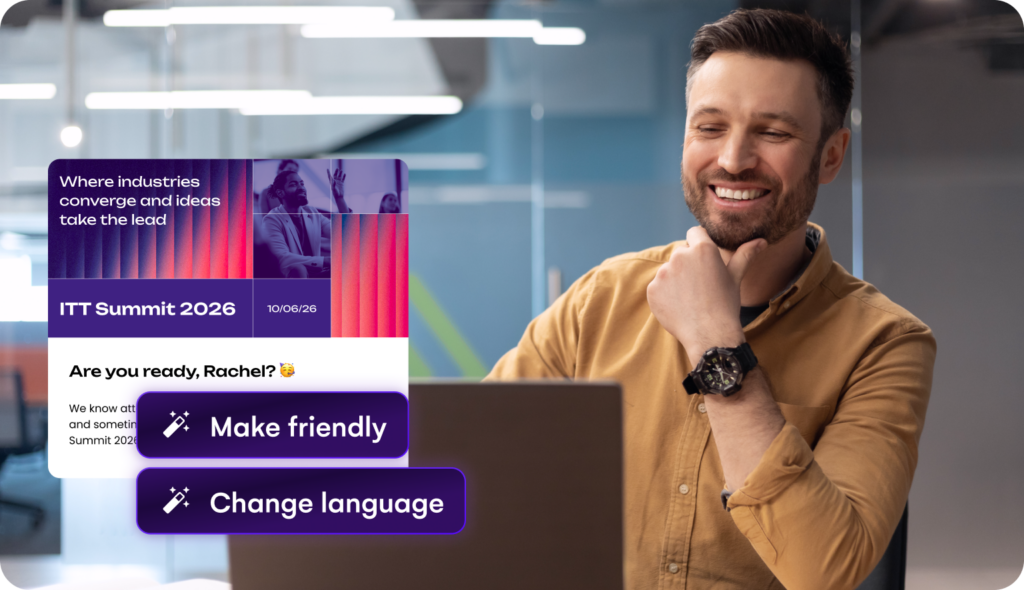
Content Assistant is already live, and it was a deliberate place to start. Writing event communications is time-consuming and repetitive. Content Assistant helps planners save time on content marketing, email campaigns, and event communications – while keeping every message on brand. It can adapt to different audiences (think: reviewers at a scientific conference versus first-time attendees at a consumer event) and can be tailored to reflect the voice, style, and brand of the event itself, so every communication feels like it belongs.
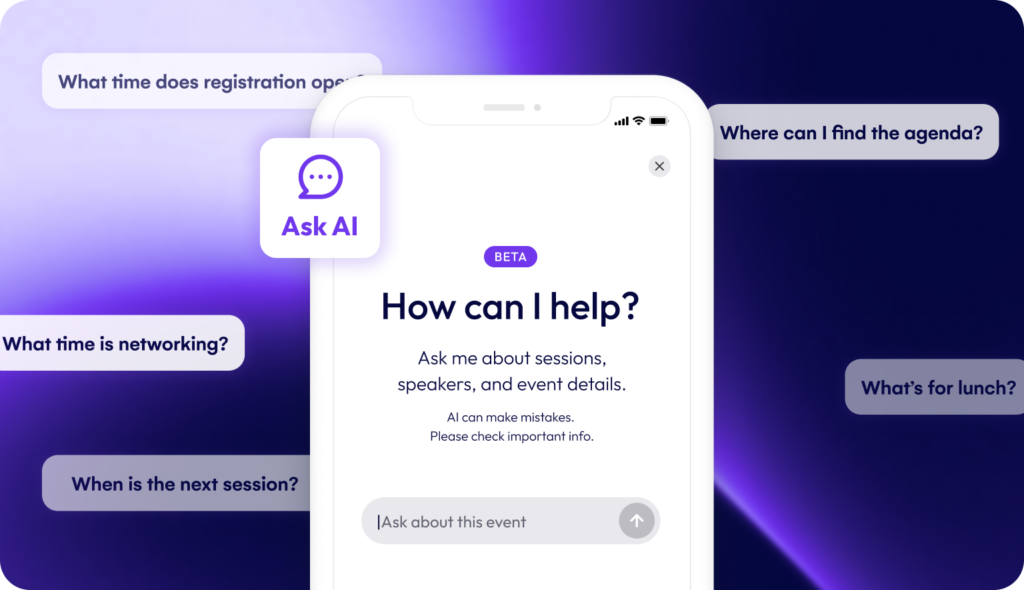
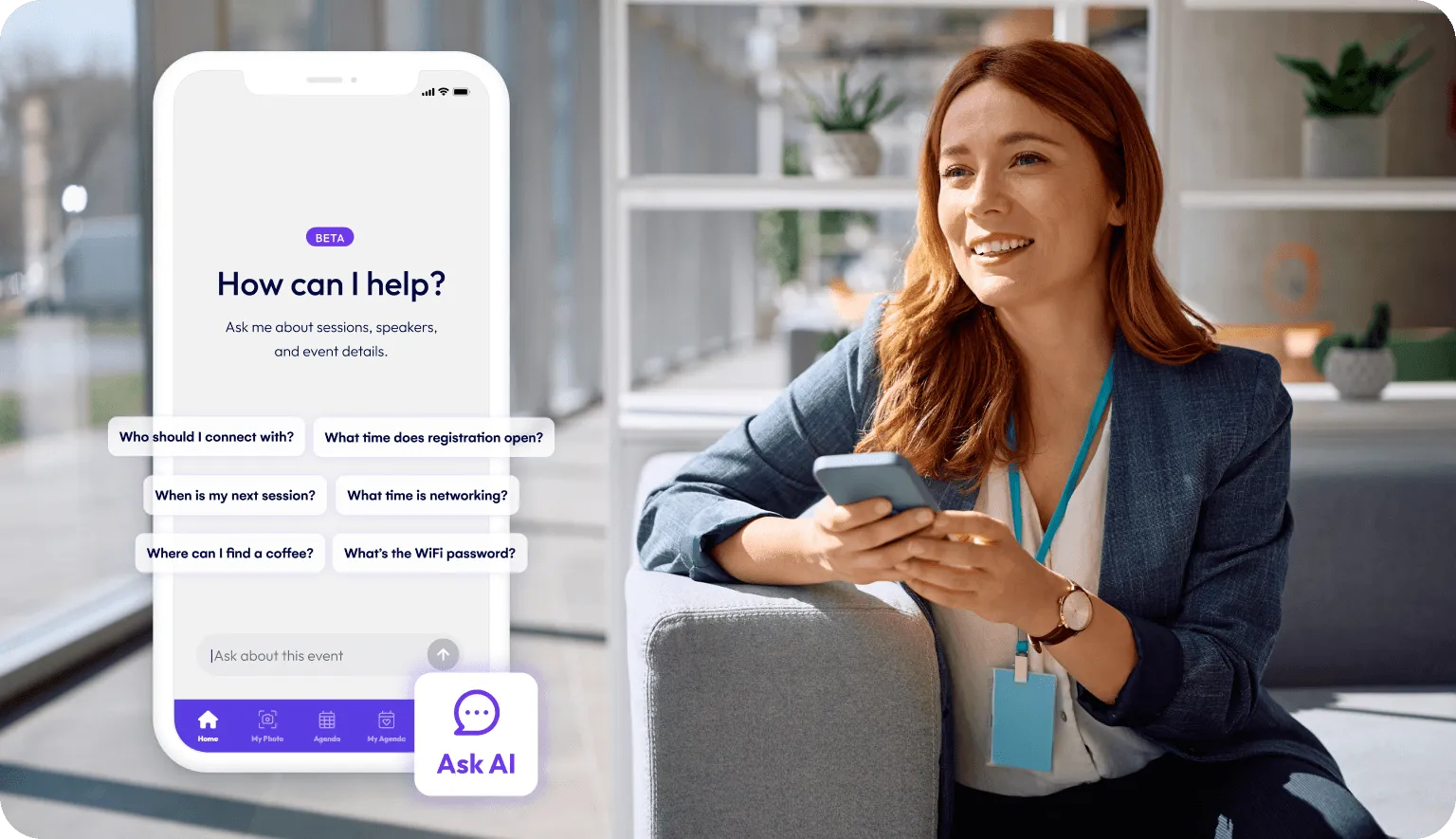
Attendee Assistant has just launched. On the surface, it's an attendee-facing feature. In practice, it's also a meaningful productivity tool for planners. Attendees ask a lot of questions at all hours. By deflecting common queries through an AI-powered assistant built directly into the event app, planners get their time back. Attendees get instant answers, even at 6am. We're also looking to expand this further: personalized agendas, smart networking, meeting matching with exhibitors – creating genuine value for attendees and commercial upside for planners.
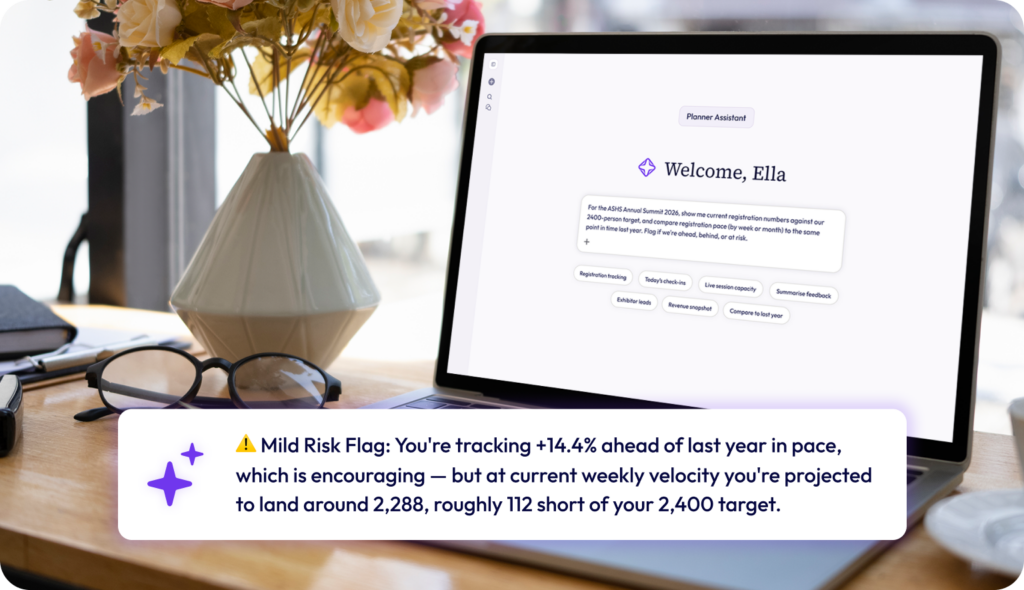
Planner Assistant is in active development and testing, and it’s quickly becoming one of the most powerful applications of Air Intelligence. The focus is on making event data easier to access, interpret, and act on. Planners will be able to ask natural-language questions across their full event dataset – from registrations and revenue to session engagement, speaker performance, and attendee behavior – and receive immediate, contextual, value-driven answers.
Beyond that, Planner Assistant is evolving to surface trends, highlight anomalies, and provide forward-looking signals. Instead of manually building reports or navigating dashboards, planners can quickly understand what’s happening, why it’s happening, and where to act next. It also opens the door to more proactive decision-making by comparing performance across events, identifying opportunities to improve outcomes, and responding to live event signals in real time.
It’s still evolving, but the direction is clear: reducing the administrative and analytical burden on planners, while giving them faster access to the insights that drive better events.
Underpinning all of this is the strength of the EventsAir platform itself. With a comprehensive, deeply integrated API across the full event lifecycle, we’re able to support advanced AI use cases natively without relying on additional layers or workarounds.
Where we're headed
AI is still in the early stages of what it will eventually become. Right now, much of the conversation focuses on experimentation – tools that can generate content, automate small tasks, or provide simple insights. Those capabilities are valuable, but they only scratch the surface of what AI can eventually enable within event technology.
What excites us most is the opportunity to rethink how event platforms actually support planners. For decades, software has required people to learn systems like navigating menus, configuring workflows, generating reports, and stitching together information from multiple places.
AI opens the door to a different kind of interaction. One where technology works more intuitively alongside planners, helping them surface insights faster and accomplish complex tasks with far less effort.
That shift won't happen overnight. But it is already beginning.
At EventsAir, we see AI not as a single feature or release, but as a long-term evolution of how event technology works. It will gradually reshape how planners interact with their systems, how attendees experience events, and how data can be used to deliver better outcomes for everyone involved.
Our responsibility in that journey is simple: to innovate thoughtfully. That means focusing on real problems, building technology that planners can trust, and ensuring that every advancement genuinely improves the event experience, both for planners and attendees.
Because while technology will continue to evolve, the purpose of events remains unchanged. Events exist to bring people together. That belief sits at the heart of our vision at EventsAir: to power events that connect, inspire, and elevate every experience.
Because when technology works the way it should – quietly supporting the people behind great events – planners are free to focus on what matters most.
And delivering effortless events, every time.
See EventsAir in action
Discover why 12,000+ event professionals trust EventsAir to deliver effortless events, every time.



Ready to transform event chaos into clarity?
With EventsAir, you’ll move from chasing logistics to creating unforgettable moments. Plan faster, act with confidence, and deliver exceptional events. Discover what’s possible with a personalized demo today.