

How to Plan and Manage a Successful Award Ceremony


A great award ceremony can feel effortless to the audience. Behind the scenes, however, it takes careful coordination to make sure every guest, presenter, sponsor, winner, and production cue is in the right place at the right time.
From managing different attendee groups and preparing presenters to coordinating stage movements, catering, AV, and sponsor commitments, award ceremonies come with plenty of moving parts. Even a small delay or missed handover can quickly disrupt the flow of the evening.
That’s why successful award ceremony event management is about more than choosing a venue and creating a run sheet. It’s about designing the entire guest and production experience so your team can anticipate issues before they happen.
In this guide, we’ll walk through the six practical steps involved in planning and managing an award ceremony, from setting your objectives and managing registrations to running the event onsite and measuring its success afterwards.
- Step 1: Define your objectives and set the timeline
- Step 2: Choose the right venue and plan the room
- Step 3: Build your registration, invitations, and guest management
- Step 4: Coordinate sponsors, presenters, and the run-of-show
- Step 5: Manage check-in, communications, and the guest experience on the night
- Step 6: Follow up within 24 hours and measure what worked

What is award ceremony event management?
Award ceremony event management is the process of planning, coordinating, and delivering every operational element of an awards event.
It includes venue and supplier management, guest registration, seating, sponsor coordination, presenter briefings, AV and production, onsite check-in, stage management, and post-event reporting.
While the judging process determines who receives an award, event management determines how that recognition is experienced by everyone in the room. The goal is to create a ceremony that feels polished, well-paced, and effortless for guests, even when there are dozens of moving parts behind the scenes.
For planners, that means thinking beyond the awards themselves. You need to manage the full journey — from the first invitation and nominee communication through to the final presentation, sponsor follow-up, and post-event debrief.
How to plan and manage an award ceremony
Step 1: Define your objectives and set the timeline
Before you book a venue or send an invitation, get clear on what the ceremony needs to achieve.
An internal employee awards night, an association gala, and an industry-wide awards program may all look similar on the surface, but they usually have very different goals. One might focus on recognition and culture, another on member engagement, and another on sponsorship revenue and industry visibility.
Start by defining a small number of clear objectives. Ask:
- Who is the event for, and what should they take away from it?
- What does success look like for attendees, winners, sponsors, and internal stakeholders?
- Which outcomes need to be measured after the event?
- What budget, production requirements, and resourcing constraints will shape the experience?
These answers should guide the rest of your planning, from venue selection and guest communications to sponsorship packages and event reporting.
Build your timeline around the complexity of the event
There is no single planning timeline that suits every award ceremony. A smaller internal event may only need a few months of preparation, while a large gala with sponsors, external presenters, complex AV, and hundreds of attendees may require a much longer lead time.
As a general guide:
6–12 months out: Confirm the event date, budget, venue, production requirements, and key suppliers.
3–6 months out: Finalize major vendors, sponsorship arrangements, guest strategy, and invitation planning.
8–10 weeks out: Move into detailed production planning, including presenter coordination, stage requirements, seating, signage, and event communications.
4–6 weeks out: Confirm guest numbers, finalize catering and production details, review accessibility requirements, and begin rehearsals and venue walk-throughs.
Build contingency into both your budget and your timeline. Award ceremonies involve a lot of dependencies, and the more complex the event, the more important it is to leave room for last-minute changes.
Remember, a clear objective and a realistic planning timeline make every later decision easier.
Step 2: Choose the right venue and plan the room
Your venue sets the tone for the evening, but it also needs to support the practical flow of the ceremony.
When comparing venues, look beyond capacity and aesthetics. Consider stage access, AV and lighting, sightlines, accessibility, catering flow, and whether there is enough space for presenters, winners, photography, and backstage coordination.
Where possible, walk through the venue with the ceremony in mind. Check how easily nominees and presenters can reach the stage, whether guests at the back can see clearly, and where winners will go after receiving their award. Accessibility should also be part of your venue criteria from the start, not something you check afterwards.
Seating also matters. Keep nominees, presenters, and VIPs in positions that allow them to move without disrupting the room. For larger ceremonies, additional screens can help ensure everyone can follow the program comfortably.
Step 3: Build your registration, invitations, and guest management
Award ceremonies often bring together very different attendee groups — nominees, presenters, sponsors, VIPs, and general guests — and each may need a different registration experience.
Start by mapping what each group needs to provide or receive. That might include ticket type, dietary requirements, plus-one details, seating preferences, accessibility needs, or sponsor entitlements.
Send invitations early enough to give guests time to respond, and make sure key information is easy to find, including the venue, dress code, timings, parking, and RSVP deadline.
Using an event management platform can simplify this significantly. With EventsAir, planners can create tailored registration paths for different attendee types, manage ticketing and payments, capture guest requirements, and keep all attendee information in one place.
You can also create a branded event website so registration, program information, and venue details are easy for guests to access throughout the lead-up to the event.
Step 4: Coordinate sponsors, presenters, and the run-of-show
Award ceremonies rely on careful coordination between sponsors, presenters, production teams, and the people receiving awards. So these all have schedules:
- Sponsor management: Ideally, this should start months before the event. Sponsors typically expect logo placement, stage mentions, and branded signage, so the earlier you agree on deliverables, the less scrambling there'll be. EventsAir offers a self-serve portal where they can upload these, and you can track them easily and know what’s missing.
- Presenters: It’s paramount to any award ceremony that presenters have clear briefings. Share talking points, timings, stage instructions, and pronunciation guides well in advance so they know exactly what to expect on the night.
- The run-of-show: This is the backbone of the evening. Map each award, transition, entertainment segment, catering cue, and production handover so every team understands what happens next.
A few principles that experienced planners rely on:
- Spread your biggest awards across the program: Don't put all the high-profile categories at the beginning. Space them out to give the audience reasons to stay engaged throughout the ceremony.
- Keep the program between one and three hours: Set a firm end time and build the schedule around it. If the program is longer, move some activities to a separate event.
- Time meal service around the program: Coordinate catering with the run of show. Serve meals between award segments rather than while presenters are on stage.
- Group awards into clear segments: Instead of treating every category as a separate item, group related awards together. This makes the program easier to follow and gives the evening a more natural rhythm.
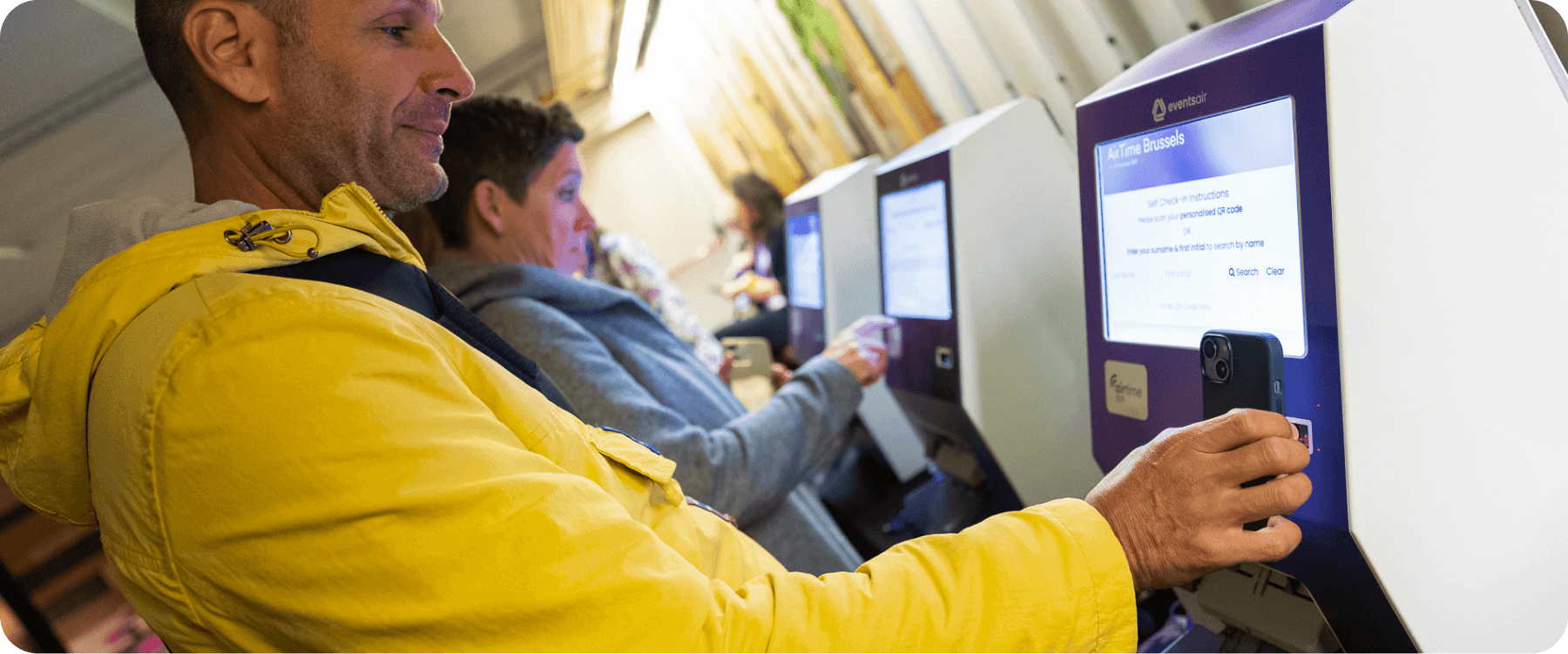
Step 5: Manage check-in, communications, and the guest experience on the night
The guest experience starts before anyone reaches the ballroom. A smooth arrival helps set the tone for the rest of the evening, so your check-in process should be fast, clear, and easy to manage.
For larger ceremonies, flexible check-in options such as self-service kiosks, staffed desks, or mobile check-in can help reduce queues and give your team real-time visibility into attendance.
That visibility is particularly useful at an awards event. Knowing whether nominees, presenters, and VIPs have arrived gives your team time to respond before they are needed on stage.
Once guests are inside, keep communication simple. An event app can provide the program, venue information, and live updates, while push notifications can help communicate any last-minute changes.
Finally, think about the moments guests will remember. Create a clear flow from stage to photography so winners can celebrate their achievement without causing delays to the program.
Step 6: Follow up within 24 hours and measure what worked
The event may be over, but the follow-up is where you capture much of its long-term value.
Start by thanking attendees, winners, sponsors, and presenters while the event is still fresh. Tailor those communications where possible — a sponsor will want something different from a winner or general guest. And include a highlight reel or photo gallery if you can, because social sharing peaks in the first 48 hours.
This is also the right time to collect feedback and review performance. Look at metrics such as attendance, registration trends, sponsor engagement, attendee feedback, and financial results to understand what worked and where there is room to improve.
For sponsors, post-event reporting is especially important. Share clear data on engagement, lead capture, and other agreed outcomes so they can see the value of their involvement.
AI-powered analysis can make this process faster and more useful. With EventsAir Planner Assistant, planners can explore their event data using natural-language questions, identify patterns and trends, and surface insights that might otherwise take much longer to uncover manually.
Finally, hold an internal debrief while the details are still fresh. Capture what worked, what didn’t, and what you would change next time so each ceremony becomes easier to plan and stronger to deliver.
For recurring ceremonies, cloning the event structure year over year saves significant setup time. You can carry forward your registration structure, communications templates, and sponsor packages, then compare attendance data across editions to see what's improving.
Run your next award ceremony without the chaos
The best award ceremonies feel effortless to the people in the room. Behind the scenes, that comes down to clear planning, strong communication, and careful coordination across every stage of the event.
From registration and guest management to presenter briefings, onsite operations, sponsor reporting, and post-event analysis, each part of the experience needs to work together.
That’s where having the right event technology can make a real difference. EventsAir brings registration, communications, check-in, sponsor management, reporting, and AI-powered analysis into one connected platform, helping planners reduce manual work and stay in control of complex events.
Planning an upcoming awards event? Book a demo and discover how EventsAir can help you deliver a smoother experience from first invitation to final report.
FAQs
How far in advance should you plan an award ceremony?
For most award ceremonies, aim to start planning at least six months in advance. Larger events with sponsors, complex production, external presenters, or hundreds of attendees may benefit from a 9–12 month planning window.
Smaller internal ceremonies can often be planned in a shorter timeframe, but the earlier you confirm your venue, suppliers, production requirements, and guest strategy, the more flexibility you will have.
How long should an award ceremony last?
Most award ceremonies should aim for around 90 minutes to two hours of formal programming. This is usually enough time to recognize winners properly without losing audience attention.
If your event includes a seated dinner, entertainment, or a large number of categories, the overall evening may run longer. Keep the awards portion tightly timed and build realistic allowances for speeches, transitions, and production cues.
How many award categories should an award ceremony include?
For many events, around 10–20 award categories is a practical range. Beyond that, the program can start to feel long unless categories are grouped carefully or the ceremony includes strong pacing and entertainment.
The right number will depend on your audience, event length, and how much time you want to give each winner, so work backwards from the overall program rather than adding categories without considering timing.
What should be included in an award ceremony run-of-show?
An award ceremony run-of-show should include every major stage and production cue, including award presentations, presenter introductions, winner announcements, AV and lighting changes, entertainment, catering, transitions, and stage movements.
It should also clearly show timings, responsibilities, and handovers so presenters, production teams, venue staff, and event organizers know exactly what happens next.
How do you manage guests, nominees, and presenters at an award ceremony?
Manage guests, nominees, and presenters as separate attendee groups with different requirements. Nominees may need specific seating, presenters need briefing and stage instructions, and sponsors or VIPs may require additional access, communications, or hospitality.
Tailored registration paths, clear pre-event communications, assigned seating, and real-time check-in data can help your team keep track of key guests and reduce last-minute issues.
Do you need event management software for an award ceremony?
You do not always need event management software for a small awards event, but it becomes increasingly valuable as the event grows in size and complexity.
For ceremonies with multiple attendee groups, sponsors, payments, communications, onsite check-in, and reporting requirements, a connected platform can reduce manual work and give planners better visibility across the entire event. EventsAir brings these workflows together in one system, including registration, communications, check-in, sponsor management, reporting, and AI-powered analysis.
See EventsAir in action
Discover why 12,000+ event professionals trust EventsAir to deliver effortless events, every time.





Ready to transform event chaos into clarity?
With EventsAir, you’ll move from chasing logistics to creating unforgettable moments. Plan faster, act with confidence, and deliver exceptional events. Discover what’s possible with a personalized demo today.