

How to Design Experiential Events for Stronger Engagement


With attendees' expectations evolving, experiential events have become the new benchmark. Event success is no longer measured only by how much content attendees consume. Instead, it now depends on how the event made them feel, what they learned that they couldn’t have found online, and whether they made meaningful connections.
This shift has quietly raised the bar for conference and trade show organizers today. In this EventsAir guide, we’ll walk you through experiential event design, practical strategies to implement it, and the role technology plays in making personalization possible at scale.
Why do attendees expect more experiential events?
Understanding why attendees now expect more experiential events is the first step to designing events that match what they want. Here are some of the biggest factors driving this change:
1. Increased value for experience over information
With the rise of on-demand content, information is now readily available. Attending an event just to receive information that could be found online is no longer a compelling enough reason to pay a registration fee or travel for an event.
Our own 2026 State of Events report found that content quality is the top driver of event success, with 78% of event professionals ranking it as a critical factor. Beyond content, attendees also come for hands-on learning, meaningful interactions, and standout experiences that can't be replicated virtually."
2. Desire for personalized content
Everyday digital experiences now offer tailored feeds and more personalized content recommendations. As a result, attendees expect similar customization from events. BizBash’s Experiential Trends Report shows this, with 54% of respondents identifying personalization as the trend generating the most interest currently.
Tailored agendas, networking opportunities, and event communications transform generic events into more relevant experiences that hold attention and remain memorable.
3. Need for active participation
Rather than just watching your event unfold, attendees want to play an active role. Our 2026 State of Events report found that 74% of event professionals ranked audience engagement as a major factor in event success, underscoring the importance of participation.
Whether through live polls, hands-on activities, or discussions, involving attendees keeps them engaged throughout the event. Without opportunities to contribute, attention rates drop, and attendees are less inclined to return for future events.
Principles of experiential events
The most engaging experiential events stem from core principles that shape event planning and operations. We’ll discuss these principles and how they contribute to experiential events below:
1. Empathy
Empathy helps you see from attendees’ perspectives and shape the agenda around their goals. Hosting great experiential events requires you to know your attendees’ needs before planning begins and not assume their expectations. That means understanding what they’re trying to achieve, what frustrates them at events, and what would make the event experience worth their time.
2. Personalization
Most events draw people with diverse objectives and backgrounds, which makes a one-size-fits-all experience ineffective. Personalization acknowledges this and gives each attendee a version of the event that aligns with their goals, interests, and behavior.
Rather than measuring success by attendance numbers alone, it allows you to curate each attendee’s experience around their own definition of value.
3. Engagement
Engagement bridges attendance and experience and can make the difference between attendees who return to future events and those who don’t. The more opportunities you give people to contribute, interact, and collaborate at your event, the more meaningful and value-driven their experience is likely to be.
4. Memorability
People remember how an event made them feel more than details about every session they attended. Generally, the most memorable moments reinforce the feeling, insight, or action you want attendees to take away from the event, not distract from it.
An immersive activation, a unique networking experience, or an unexpected demonstration can inspire an audience and leave an impression long after the event is over.
5. Continuity
The attendee journey shouldn’t end abruptly when the event closes. Continuity maintains your relationship with attendees through consistent event branding and ongoing communication before, during, and after the event, allowing for smooth transitions and an extended experience.
Treating the closing session as the finish line sidelines the opportunity to continue conversations and strengthen attendee relationships.
How to design experiential events
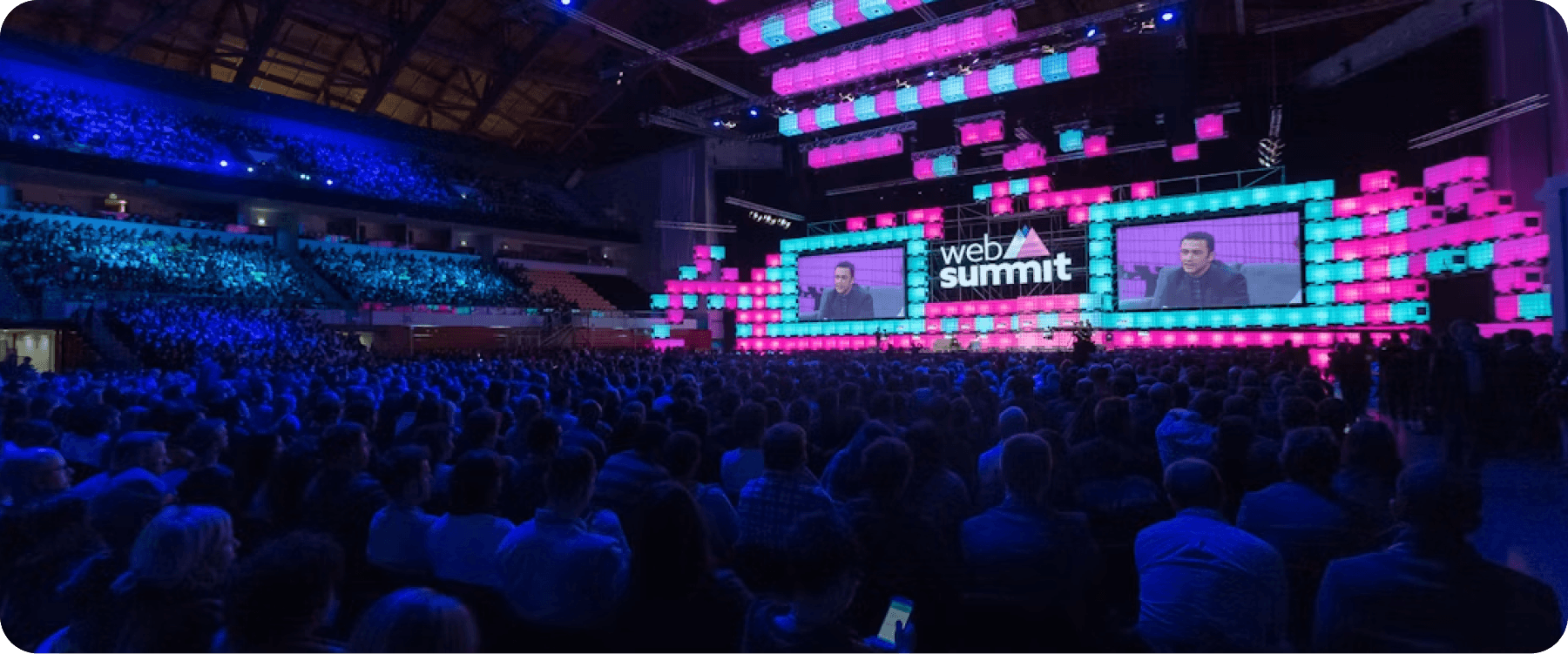
To design experiential events, you need a deliberate strategy that’s more than a single activation moment. Here’s how to combine thoughtful planning, personalization, and technology to create experiences attendees remember even after the event ends:
1. Understand your audience before planning
Designing an effective experiential event starts with identifying your target attendees and what success looks like from their viewpoint. Every planning decision that follows should support this outcome. Without a clear picture, you’ll be basing decisions on what you assume they want rather than evidence.
First, collect attendees’ details and preferences during sign-up and build simple audience personas from this information. Then, map the journey each persona takes through the event and moments where their experience could be stronger. Here are some details to gather before planning begins:
- Primary objectives: What does each attendee segment hope to achieve?
- Previous event feedback: What did they like or dislike about similar previous events?
- Session and format preferences: Which topics and formats interest them?
- Networking intentions: Are attendees looking for peers, partners, clients, or mentors?
- Accessibility needs: How will they navigate the event?
EventsAir’s pre-event survey tools and conditional registration forms help you collect these insights directly from attendees during sign-up. Additionally, you can speak with exhibitors, sponsors, and customer-facing teams to understand the audiences, goals, and interactions that matter most to each stakeholder.
2. Build momentum before the event
Attendee experience starts with their first interaction with your brand and should happen long before check-in. Pre-event engagement builds anticipation, helps attendees prepare, and reduces the time they need to orient themselves onsite.
To increase momentum, send targeted pre-event content such as speaker announcements, session previews and updates, networking advice, agenda-building reminders, and countdowns. Attendees who’ve already mapped out their schedule and know who they want to meet arrive better prepared to participate and contribute.
3. Personalize attendees’ journeys
Attendees need flexibility to build agendas around their interests, discover relevant sessions, and connect with people who align with their objectives.
Based on the information collected during registration, segment your audience and tailor event content to suit those stated preferences. This can include personalized agendas, targeted communications, exhibitor recommendations, networking matches, and even wayfinding suggestions.
Tip: Giving attendees more choice can create decision fatigue if the agenda is difficult to navigate. With EventsAir, attendees can build personalized schedules in the event app and receive timely reminders based on the sessions they select.
4. Encourage active participation
Design sessions that encourage attendees to contribute rather than simply listen. When they take part in sessions, they’re also more likely to explore the event and perceive greater value.
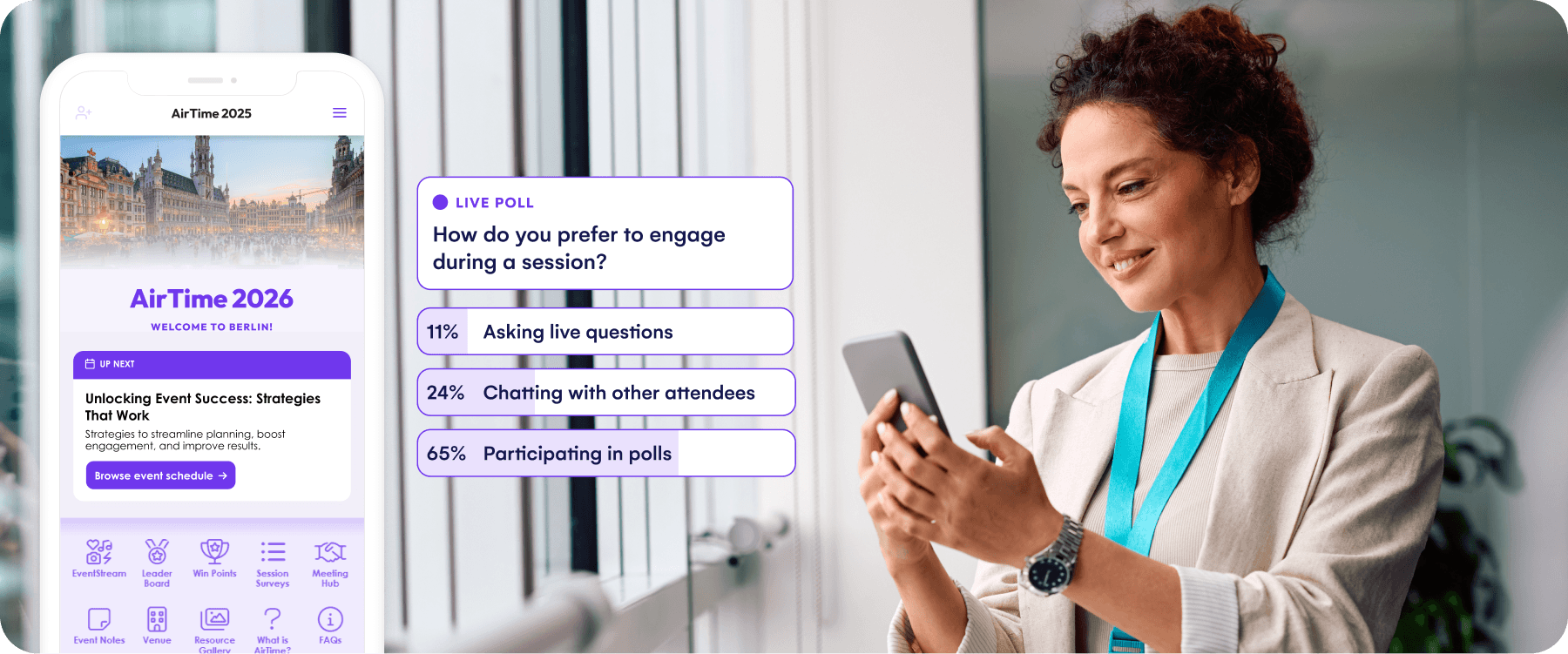
For variety, provide different participation tools, including polling, moderated Q&As, workshops, demonstrations, and roundtables to enable them to learn through activity. EventsAir’s engagement features support live polls, Q&As, and gamification for creating friendly competition, raising audience morale, or rewarding top participants.
5. Design networking opportunities
Networking is one of the main reasons people attend events, yet in unstructured environments, several attendees struggle to identify who to connect and engage with. Creating opportunities that facilitate interaction helps attendees meet the right people.
Networking ideas could range from hosted roundtables to topic-specific meetups, speed networking rounds, or AI suggestions and connection cards. Even simple networking prompts in your event app can help more introverted attendees start productive conversations.
6. Create immersive experiences
Immersion separates memorable events from those attendees move on from quickly. It’s easy to assume this requires a massive budget, but in reality, what matters is your ability to combine your environment, content, and interactive activities cohesively.
This incorporates any elements that engage the senses, including thoughtful exhibition themes, storytelling, interactive installations, and branded environments. Lighting, sound, staging, and signage can also go a long way in reinforcing an exciting atmosphere.
7. Incorporate digital tools
Technology doesn't replace human interaction, but rather, enables personalization, stronger connections, and real-time responsiveness at scale.
With event management platforms, you can tailor guidance about what sessions and exhibitor booths they should visit, reducing the time they spend figuring out logistics. AI-powered assistants built into the event app can field these questions directly, offering attendees real-time, conversational recommendations without adding to the organizing team's workload. These platforms also let your team send targeted communications, track engagement in real time, and respond to attendee feedback as it arises during the event.
8. Measure engagement and extend the experience beyond the event
How you follow up with attendees during and after the event determines whether the connections, conversations, and momentum will carry forward or fade immediately.
During the event, measure attendance, booth visits, and audience engagement, so you can identify declining participation and adjust communications, session support, or programming while the event is still live. Next, sustain the momentum you’ve gained by:
- Sending personalized thank-you emails within 24 hours referencing sessions attendees joined or exhibitors they visited
- Distributing surveys while the experience is still fresh
- Sharing session recordings, speaker insights, or curated content for added value
- Delivering sponsor and exhibitor ROI reports with lead data and engagement metrics
At this point, speed and accurate data are essential, and disconnected tools can slow your process down or introduce errors. EventsAir’s reporting and analytics tools let you capture engagement data and attendee feedback in the same system you used to run the event so you can avoid messy data transfers.
The role of technology in delivering personalized journeys at scale
Personalized attendee journeys are relatively straightforward to deliver at small events. But as attendance grows, they become difficult to handle manually, and attendees notice these cracks.
Common problems with high-volume manual personalization include:
- Too many attendee profiles to manage individually
- No reliable way to guide attendees’ journeys and floor navigation
- Slow announcements for impromptu changes
- Engagement data scattered across various tools and workflows
Using technology and AI-enhanced experiences, personalization is much easier to scale. Event organizers can communicate with and guide each attendee without increased administrative workload or platform complexity.
Industry reports also back this. In an AmEx GBT survey, respondents ranked delivering a more streamlined and memorable attendee experience as technology’s greatest benefit. As a result, the value of technology goes beyond efficiency to providing consistent quality experiences no matter your event size.
Rather than treating registration, communications, engagement, and reporting as separate tasks, organizers can manage them simultaneously through a connected attendee profile. Essentially, technology provides a centralized planning system and streamlines customization, all without straining your team.
What features should event technology support?
Choosing the right technology reduces friction in event planning, execution, and follow-up. Before committing to an event management platform, evaluate it against these specific outcomes to see how it supports your operations and attendee experience:
1. A connected attendee journey
A standalone event app will improve the onsite experience but doesn’t guarantee a connected attendee journey on its own.
Look for a platform that links registration, agenda management, the event app, communications, and reporting in a unified system. Disjointed workflows break personalization down and create inconsistent attendee experiences.
Tip: Juggling separate tools fragments attendee data and makes live event changes harder to coordinate. EventsAir's mobile app stays fully synchronized with the rest of the platform, giving you real-time reporting and up-to-the-minute attendee data, plus the ability to make changes from the same platform you already know.
2. Native participation and networking tools
Experiential events require active participation, and your platform needs to support it natively. A system with built-in participation tools such as live polling, Q&A, gamification, and networking features naturally encourages attendees to contribute to sessions. On the other hand, using bolted-on solutions leads to disinterest or unnecessary friction, discouraging interaction.
3. Optimized personalization
Personalization falls apart if attendees can’t shape their own experience, especially at scale. Prioritize platforms that let attendees build their agenda before the event, receive session reminders on the day, and discover sessions or networking opportunities based on their interests. This provides unique value at every stage of your event without requiring manual intervention from your team.
4. Real-time communication
Room swaps, schedule changes, and last-minute announcements are common at events and can disrupt the event experience if attendees aren’t informed on time. To avoid this, the platform should support push notifications by attendee segment, in-app announcements, and email in one location.
This way, the right message reaches the appropriate recipients without your team managing multiple communication tools simultaneously.
5. Measurement across the event lifecycle
Creating memorable experiences is only half the job since you also need to understand what worked so you can make stronger plans in the future. The right tool should track attendance, app engagement, networking activity, and survey responses during the event.
Moreover, these insights should be shareable with stakeholders to prevent your team from pulling data from disconnected sources.
6. Integration with existing systems
Your event platform shouldn’t create a data silo. When attendee information can’t sync between your existing systems and new platform, logistics get disorganized, which in turn leaves attendees disoriented.
Confirm that your platform can connect with your CRM, marketing automation, and finance tools so lead data, attendee records, and payment information flow automatically without errors.
Tip: Native integrations reduce the manual re-entry and reconciliation work that fragmented systems create. EventsAir's Smart Connectors sync registration, payment, and attendee data directly with tools like your CRM and accounting software, so information stays accurate across systems without manual exports or double handling.
Experiential event ideas from conferences and trade shows
Rather than elaborate productions alone, the best experiential event ideas encourage attendees to explore, participate, and connect in meaningful ways. Here are four ideas inspired by successful B2B conferences and trade shows:
1. Interactive product demos
Active participation creates stronger impressions and helps attendees better understand your solution compared to a traditional sales pitch. Replace static displays with hands-on experiences that let attendees explore your product for themselves.
For example, BizBash’s CES 2024 report showed how Google Android transformed a product demo into an interactive experience. Visitors entered an augmented reality journey, explored the Magic Compose AI feature, then created and mailed a personalized postcard from the booth.
Turning a feature demonstration into something attendees could actively experience and take home made the product far more memorable than a slide deck presentation.
2. Built-in networking sessions
Meaningful connections rarely happen by chance on a busy show floor. Structured networking changes that dynamic by matching attendees based on shared interests, industries, or goals and pre-scheduling meetings before they even arrive.
MCI Group experienced this firsthand using EventsAir’s built-in networking tools to let attendees connect through the event app. According to the team, their experience was ‘set and play,’ running without further management once built, despite the event being virtual.
By making it easier for participants to discover and connect with relevant people before and during the event, networking felt more purposeful and frictionless.
3. Themed exhibition journeys
Instead of leaving attendees to navigate a large show floor on their own, create structured journeys that encourage deliberate exploration. Passport challenges, where attendees collect stamps or scan QR codes at exhibitor booths to unlock rewards, are a simple way to increase engagement and booth traffic.
SaaStock Europe used this approach. Attendees who visited eight of 12 sponsor booths were entered into a prize draw. The initiative achieved a 70% completion rate, far exceeding the typical 15–25% booth visit rate, and sponsors paid a premium to participate the following year.
Replacing passive floor wandering with a guided journey works because it drives traffic to booths attendees may overlook, helping you prove event ROI.
4. Social media moments
Design spaces and activations that attendees naturally want to photograph and share. Doing this extends your event’s reach while giving attendees another way to engage with the experience.
For example, Dreamforce 2024 featured a park-themed campus with an AI Industry Micro-Museum, a live Salesforce+ production set, and color-coded zones that doubled as navigation and social media backdrops.
As a bonus, every post attendees make takes your event to an audience outside the venue. Build moments into your floor plan that prompt them to show what they did, what they learned, or who they met.
Create memorable event experiences with EventsAir
As expectations for personalized, interactive events grow, delivering memorable experiences is more critical than ever. To execute such events, you need creative ideas, structured plans, and technology that connects planning to delivery.
EventsAir gives you enterprise-level event management capabilities for a wide range of event formats and sizes in a unified environment. Whether you’re looking for pre-event audience segmentation, personalized agendas, engagement, networking, communications, or post-event insights, our software is well-equipped to support your event needs at scale.
Book a demo today to see how you can design memorable, data-driven event experiences with EventsAir’s attendee engagement and event management platform.
See EventsAir in action
Discover why 12,000+ event professionals trust EventsAir to deliver effortless events, every time.




Ready to transform event chaos into clarity?
With EventsAir, you’ll move from chasing logistics to creating unforgettable moments. Plan faster, act with confidence, and deliver exceptional events. Discover what’s possible with a personalized demo today.