

SEO Guide for Event Marketing: How to Increase Visibility and Registrations


As an event organizer, it’s easy to spend weeks planning an event, only to discover that, although it looks successful on paper it doesn't show up where it matters: in search results. Without using effective SEO for event marketing, even well-produced events with valuable sessions could end up with empty seats, lower attendance, and reduced ROI for sponsors.
Fortunately, in this EventsAir guide, we will explore how to use SEO to make event websites and registration pages more visible online. We’ll also explain how event SEO works, why it matters, and common mistakes to look out for to get the best results.
What is SEO for events?

Event SEO is the process of optimizing an event’s online presence for search engines. When done well, your event ranks high for searches around related topics, speakers, or locations. This makes it easier for potential attendees to discover your event before registration closes or the event date passes.
Unlike general SEO, event marketing SEO focuses on promoting time-sensitive content. This often involves optimizing landing pages, improving the mobile experience, and publishing blog content around active search terms. Altogether, these practices boost your event’s visibility and drive higher registrations.
Key characteristics of event SEO
Event SEO combines several moving parts that have to work together. Before applying the process, it helps to understand the role each one plays:
- Keyword research: Identifies the search demand behind your event topic, audience, location, speakers, and registration intent
- Optimized registration and landing pages: Give search engines and potential attendees one clear destination for your event details and sign-up journey
- Event schema markup: Adds structured event information that helps search engines interpret your page more accurately
- Supporting content and internal linking: Expands your event’s search footprint through related assets such as blogs, speaker interviews, press releases, event survey pages, agenda previews, and FAQs
- Technical SEO and mobile experience: Makes sure your event pages are accessible, crawlable, and easy to use across devices
- Performance tracking and reporting: Connects SEO activity to visibility, organic traffic, registrations, and post-event learning
Think of these components as the building blocks of event discoverability. The stronger the foundation, the easier it becomes for your event content to support awareness, interest, and registration over time.
Why does SEO matter in event marketing?
Since most people search online before deciding which events to attend, SEO helps position your event where those decisions are happening. Below are the key reasons why SEO is essential for event marketing success:
1. Increase visibility in search results
SEO increases event visibility by helping your pages appear in search engine results when people search for relevant topics, industries, or event types. So, instead of your event being hidden behind paid ads or social posts, it becomes discoverable organically on platforms like Google.
This is especially important when hosting events in competitive fields, like academia, where multiple events may compete for similar audiences. A Backlinko research found that the top organic result can attract around 10 times more clicks than a result near the bottom of page one. For event organizers, that means stronger search visibility can help put your sessions, speakers, and registration details in front of more people who are already looking.
2. Capture high-intent registration searches
Event marketing SEO allows you to target people who are already looking for events like yours, and, therefore, have a strong intent to register. These users often search phrases like “tech conference near me” or “marketing webinar 2026,” showing they are actively seeking opportunities to attend.
Optimizing your pages for these search terms allows you to connect directly with users who are closer to making a decision. This leads to higher-quality traffic compared to broad advertising. Instead of trying to convince people to become interested, SEO helps you appear exactly when they are ready to take action and register.
3. Reduce dependence on paid advertising
SEO reduces your reliance on paid advertising by generating consistent organic traffic over time. While ads stop delivering results once the budget runs out, SEO continues to attract visitors long after the initial optimization work is done.
This makes it a cost-effective strategy for event promotion, especially for recurring events or organizations hosting multiple events yearly. At the end of the day, you get lasting visibility that continues bringing in registrations well beyond a single campaign period.
4. Support the full event lifecycle
SEO supports every stage of the event lifecycle, not just ticket sales or registrations. In the early stages, it helps generate awareness through blog content and informational searches. As the event approaches, optimized landing pages and keyword targeting drive registrations.
After the event, SEO can continue through recap articles, recordings, and speaker content, keeping your brand visible. This ongoing presence helps maintain audience engagement between events and builds anticipation for future ones. Instead of being a one-time marketing effort, SEO ensures your event remains discoverable and relevant throughout its entire lifecycle.
5. Build credibility with attendees, speakers, and sponsors
When potential attendees consistently see your event ranking high, it creates a sense of authority and professionalism. This also influences speakers and sponsors, who often assess visibility and reach before participating in an event.
A well-optimized presence signals that your event is organized, reputable, and widely recognized in its space. Over time, this credibility helps attract higher-quality speakers, better sponsorship deals, and more confident attendees who are more likely to register and engage.
Step-by-step guide to adopt SEO for event marketing

Using SEO for event marketing requires harmonization across content, technical optimization, user experience, and search intent to help your event become more discoverable online. Here’s a breakdown of how to use SEO for event marketing, step by step:
Step 1: Define your event SEO goals
Before you get into optimizing your event websites and registration pages, you must first decide what you want to achieve with the entire process. At this stage, you can select one or multiple goals and set a priority for your event.
Depending on your needs, your event SEO goal could be to improve your brand’s visibility, attract sponsors, or even drive traffic to speaker pages and event agendas. Ultimately, defining your goal first sets the tone for your optimization process and helps provide direction on what practices to focus on and even what tools to use.
Step 2: Perform keyword research for your event and audience
Keyword research is the foundation of event SEO because it helps you understand what potential attendees are searching for online. To achieve this, start by identifying keywords related to your event type, industry, audience interests, location, and speakers.
For example, instead of targeting a broad phrase like “business event,” a cybersecurity conference could target terms like “cybersecurity conference 2026”, “cloud security summit”, or “IT networking events in Ohio”. These more specific keywords often attract users with stronger registration intent.
Once you have your keywords set, use tools like Google Keyword Planner, Ahrefs, SEMrush, or even Google autocomplete suggestions to find search terms people actually use. Then you can naturally place these keywords in your event title, headings, meta descriptions, URLs, and content across different pages.
Below is a quick guide to help you map your keywords to event pages:
While doing this, be sure to avoid keyword stuffing. Instead, focus on matching search intent by answering the exact questions users may have.
Step 3: Optimize your event website and registration pages
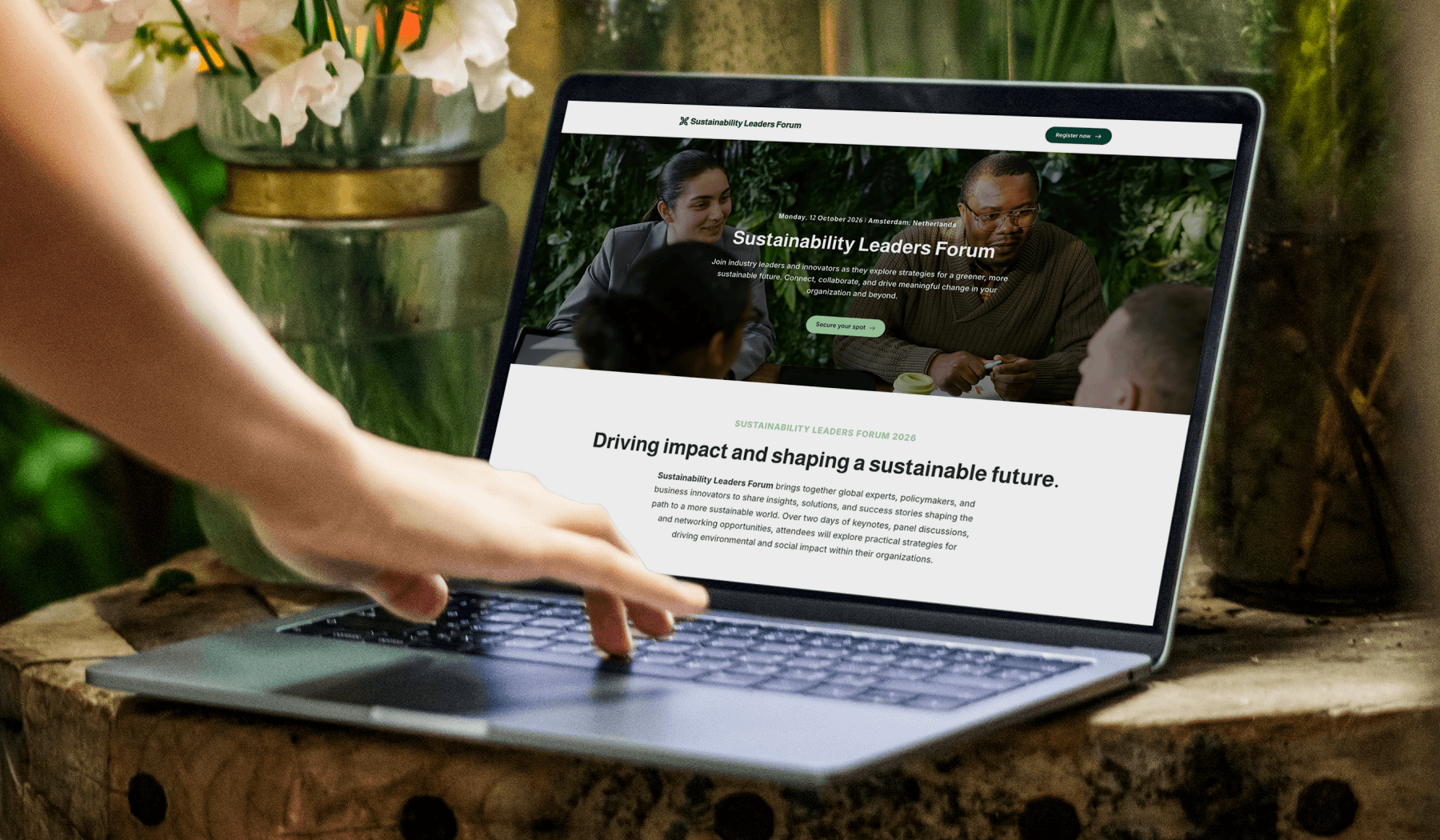
Your event website and registration page should be designed for both search engines and users. To optimize these pages, create a dedicated landing page with a clear event title, concise description, speaker information, date, location, and registration details. While doing this:
- Include your primary keywords naturally throughout the page
- Ensure the registration process is simple and mobile-friendly since many users register on their phones
- Add brand elements and colors to create a more consistent attendee experience
- Reduce unnecessary form fields and make calls-to-action highly visible. For example, a “Register Now” button should appear multiple times throughout the page
- Add trust-building elements like testimonials, sponsor logos, or previous event highlights
Managing event pages separately from registration can create disconnected attendee journeys and make updates harder to control. EventsAir’s all-in-one event management platform helps simplify this process by letting you build your event website, registration forms, and attendee app from a single platform, giving you one source of truth throughout the entire event lifecycle. As registrations come in, attendee data automatically flows through to your reporting and event management tools,
Step 4: Build supporting content ahead of the event
Supporting content helps attract traffic before people are ready to register and keeps your event visible across multiple search queries. This means that instead of relying only on a registration page, you can create related content that answers questions your audience may search for.
Supporting content could include speaker interviews, press releases, industry trend articles and event FAQs. You can also publish event ticketing information and travel guides for in-person events, such as travel and accommodation recommendations.
For example, if you are hosting a healthcare conference, publish blog posts about emerging healthcare trends or interviews with featured speakers. Then link these articles back to your registration page using internal links.
If your event runs annually, consider keeping the same event URL each year rather than creating a new page from scratch. Updating an existing page with the latest event information, while preserving useful content from previous years, helps build a stronger SEO foundation over time. It also creates a single destination for attendees and search engines, making it easier to maintain rankings, backlinks, and relevant content in one place.
This helps search engines understand the relationship between your content while guiding readers toward registration. Supporting content also gives you more opportunities to rank for long-tail keywords.
Step 5: Adapt SEO by your event type
Different event formats require slightly different SEO approaches because user intent, search behavior, and discovery paths aren’t always the same. Below are ways to tailor your SEO strategy based on the event format:
- In-person events: Focus on local SEO and location-based searches. This means choosing keywords like “events near London” or “B2B marketing conferences in London 2026” for a London-based conference, for example. It also means optimizing for venue details, maps, and city-specific keywords to attract nearby and traveling attendees.
- Hybrid events: Target both physical and virtual audiences using keywords like “hybrid conference” or “online and in-person event.” However, it’s important to clearly separate attendance options on your landing page for reporting purposes.
- Virtual events: Focus on broad reach and high-intent informational searches. You can use keywords such as “online webinar on cybersecurity” or “virtual cybersecurity conference 2026.” You also need to use supporting content and prioritize mobile optimizations and fast registration, since users often sign up after discovering the event.
Step 6: Build backlinks and promote your content
Backlinks are links from other websites pointing to your event page, and search engines often view them as signals of credibility and authority. Basically, the more high-quality websites mention your event, the stronger your SEO performance becomes.
A practical way to build backlinks is by partnering with speakers, sponsors, media outlets, and industry organizations. Ask them to include your event link on their websites or announcement pages.
Then, to promote your content, submit your event to online event directories, industry calendars, and local listings. You can also carry out content promotions by:
- Sharing speaker interviews through speaker and sponsor networks
- Repurposing agenda content into LinkedIn posts and email campaigns
- Asking sponsors, exhibitors, and partners to link to the event page
- Using email and social channels to push high-performing SEO content
- Using UTM links to track which promotion channels drive registrations
A tech conference, for instance, could gain backlinks from technology blogs, startup communities, or partner companies promoting attendance. They can also publish shareable content like research reports or expert interviews tied to the event topic.
Step 7: Cover the technical fundamentals
The technical aspects of event SEO ensure your website performs properly for both users and search engines. After all, even strong content can struggle to rank if the site is slow, difficult to navigate, or poorly optimized for mobile devices.
To ensure your technical SEO is effective, focus on optimizing your pages for mobile responsiveness without zooming or scrolling issues. It’s also important to use HTTPS security and ensure clear navigation on your pages, and avoid broken links or duplicate pages.
For a more seamless attendee experience, you also need to improve page loading and navigation speed. You can do this through adequate image compression, applying clean code, and using reliable hosting.
Step 7: Track performance and act on the data
Finally, you need to track SEO performance to understand which strategies are driving traffic and registrations so you can improve results over time. To do this, use tools like Google Analytics and Google Search Console to monitor metrics, including:
- Visibility by tracking impressions and keyword rankings
- Engagement via click-through rates, bounce rates, and average time spent on your pages.
- Conversion by checking the number of registrations started and completed
- Post-event metrics, like recap traffic and number of recording views.
These insights show you how users discover and interact with your event pages. For example, if a blog post about keynote speakers generates high traffic but few registrations, you may need a stronger call-to-action or better internal linking. Or, if certain keywords drive more conversions, you can create additional content targeting similar terms.
Performance tracking also helps identify technical problems, such as slow pages or indexing errors, before they affect visibility.
Advanced tip: Use event schema markup
Once you've covered the SEO fundamentals, consider adding event schema markup to your event pages. Schema is structured data that helps search engines better understand your event details.
When implemented correctly, Google may display rich search results that include information such as your event date, location, ticket availability, and pricing. These enhanced listings can make your event stand out in search results and encourage more people to click through.
If your website is built on platforms like WordPress, many SEO plugins can generate schema automatically. Otherwise, developers can implement it using JSON-LD. Be sure to include key details such as your event name, start date, venue, organiser, and registration URL, then validate your markup using Google's Rich Results Test.
Sample timeline for using SEO for event marketing
A structured timeline for your event SEO helps you build visibility gradually instead of rushing promotion close to the event date. The earlier you start, the better. SEO takes time, and it can take weeks or even months for search engines to crawl, index, and rank new content.
This is especially true if you're launching a new event or website with little existing authority. Starting early gives your content more time to build visibility, helping you attract organic traffic well before registrations open.
Below is a sample timeline you can follow for better event visibility and registrations:
- 6 months before the event: Start keyword research, create your event landing page, optimize titles and meta descriptions, and implement event schema markup. This gives search engines enough time to index your pages and understand your event.
- 4–5 months before the event: Begin publishing blogs, speaker interviews, FAQs, and industry-related articles targeting long-tail keywords. Internally link all supporting content back to your registration page.
- 2–3 months before the event: Promote your event through partnerships, guest posts, media mentions, event directories, and sponsor websites to build backlinks and authority.
- 1 month before the event: Review analytics to identify pages generating the most traffic. Update content, improve CTAs, refresh keywords, and push high-performing pages through email and social channels.
- During the event: Publish live updates, session highlights, presenter and speaker quotes, and recap content while search interest is highest. This keeps traffic flowing and supports post-event visibility.
- Post-event: Publish event recaps, recorded sessions, and speaker insights to continue attracting traffic after the event ends. For recurring events, update existing pages, backlinks, and search authority for future promotions.
Common mistakes when using SEO for event marketing

Many event organizers invest in SEO but still struggle to gain visibility or registrations because of avoidable mistakes. Here are some common ones to watch out for:
1. Starting too late
One of the biggest event SEO mistakes is waiting until a few weeks before the event to start optimization. This is especially challenging in competitive industries where other events have already established search authority months earlier.
Starting early gives your landing pages and supporting content enough time to build rankings and attract traffic gradually. Ideally, SEO planning should begin several months before the event launch so search engines can properly recognize and rank your content.
2. Building a new URL every year
Many organizers create completely new event URLs every year, which resets the SEO value built from previous events. Old pages often already have backlinks, rankings, and indexed authority that help drive organic traffic. Deleting or abandoning them means starting from scratch each year.
Instead, keep a consistent URL structure whenever possible and update existing pages for recurring events. For example, a conference page can evolve annually while preserving its SEO value.
3. Leaving registration pages with no content or metadata
Some event registration pages contain very little information beyond a signup form, making it difficult for search engines to understand and rank the page. Missing title tags, meta descriptions, headings, and keyword-rich content also reduce visibility in search results.
A strong event page should clearly explain what the event is about, who it is for, why it matters, and how to register. Including optimized metadata, FAQs, speaker details, and agenda information improves both SEO performance and user experience.
If your event website already provides this information on a dedicated landing page that links to registration, that's perfectly fine. However, if your registration page is the primary destination for prospective attendees, it should include enough content for both search engines and visitors to understand the value of your event.
4. Publishing no supporting content and earning no backlinks
Relying only on a registration page limits your SEO reach because search engines prefer websites with broader topical authority and supporting content. If no external websites mention or link to your event, you may struggle with your rankings. So, it’s important to combine supporting content and backlink outreach to expand visibility.
5. Deleting event pages
Many organizers delete event pages once the event ends, which removes all the SEO value those pages have built over time. Existing rankings, backlinks, and organic traffic opportunities can disappear immediately when pages are removed.
Instead of deleting pages, keep them working for you after the event. You can convert them into recap pages featuring highlights, recordings, speaker insights, and photo galleries, or, if the event is returning, update the page with a "coming soon" message and a sign-up form for early access or event updates. For recurring events, maintaining or updating the existing page helps preserve rankings, backlinks, and site authority while giving prospective attendees a central place to find the latest information.
6. Ignoring mobile performance and page speed
A slow or poorly optimized mobile experience can significantly hurt event SEO and registrations. Many attendees discover events through smartphones, so pages that load slowly or display incorrectly can lead to abandoned registrations.
To avoid this, use a reliable platform that helps you create mobile-friendly event websites and registration pages without adding more disconnected tools to your workflow. EventsAir supports this by combining event websites, registration, communication, and reporting in one reliable event management platform, so attendees can quickly access the information they need.
Support your SEO strategy with EventsAir
A strong event SEO strategy needs more than optimized copy. Your event pages, registration workflows, content updates, attendee communications, and reporting should work together so visibility can convert to registrations.
EventsAir is an all-in-one event management platform that brings these workflows into one connected system. With tools for registration, ticketing, speaker management, reporting, and event success services, EventsAir helps organizers support SEO and event marketing more consistently.
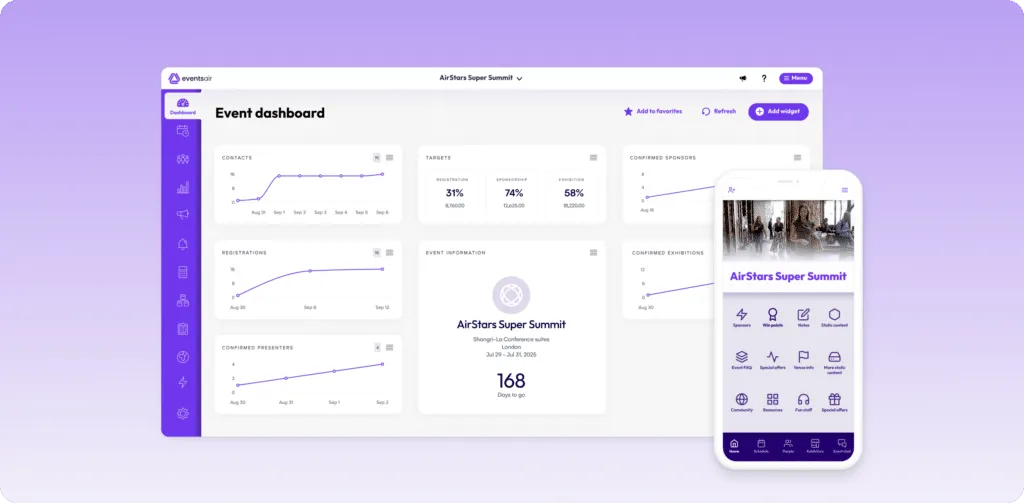
With our comprehensive suite of tools, you can:
- Build structured SEO-friendly event landing pages: Create dedicated event pages using clean layouts, logical hierarchy, and properly structured headings. This makes it easier for search engines to interpret your content while also improving readability for potential attendees.
- Optimize content structure for search visibility: Structure your content with clear metadata and headings, presenting event details in a way that improves clarity and usability.
- Improve mobile experience and page performance: Ensure that registration and event pages are responsive across devices. A mobile-friendly experience reduces bounce rates, increases engagement, and supports better SEO performance through improved user signals.
- Update and reuse existing event pages: Instead of starting from scratch for every event, you can refresh and repurpose existing pages with EventsAir. This helps maintain established page authority and content structure, rather than losing performance with each new build.
- Support event delivery across different formats: Whether you’re hosting in-person, hybrid, or virtual events, EventsAir provides a consistent framework for publishing and managing event information. This consistency helps ensure a unified experience for audiences and makes event details easier to navigate and engage with.
Overall, EventsAir helps you create SEO-friendly event pages, manage registration journeys, promote your event, and track performance from one connected platform.
So, if you’re ready to boost your event visibility and registrations with EventsAir, request a demo, and we’ll get you all set up.
See EventsAir in action
Discover why 12,000+ event professionals trust EventsAir to deliver effortless events, every time.




Ready to transform event chaos into clarity?
With EventsAir, you’ll move from chasing logistics to creating unforgettable moments. Plan faster, act with confidence, and deliver exceptional events. Discover what’s possible with a personalized demo today.