

How to Set Up an Event Efficiently: The Best Workflow for Planners


We know that setting up an event can feel overwhelming.
Between registration, payments, attendee communications, branding, functions, reporting requirements, and countless configuration decisions, it’s easy to spend weeks building an event before you’re truly ready to launch.
The challenge isn’t usually a lack of tools or ideas. It’s knowing where to start.
The most successful event planners understand that efficient event setup isn’t about completing every task as quickly as possible. It’s about establishing the right foundations in the right order, reducing unnecessary complexity, and creating a structure that can support the rest of the event lifecycle.
Whether you’re planning a conference, seminar, roadshow, training program, networking event, or multi-day convention, following a structured setup workflow can help you save time, reduce rework, and create a better experience for attendees.
In this guide, we’ll walk through the essential foundations every event planner should establish before launching registrations.
What does efficient event setup actually mean?
When people think about efficiency, they often think about speed.
In event planning, efficiency is much more nuanced.
Efficient event setup means:
- Making important decisions early
- Completing tasks in a logical sequence
- Avoiding duplicate work
- Reducing configuration errors
- Creating consistency across your event experience
- Building a foundation that can scale as your event grows
The reality is that many event challenges can be traced back to setup decisions made weeks or months before launch.
A poorly structured registration process, unclear ticketing strategy, missing attendee data, or incorrectly configured payments can create operational headaches long after registrations open.
That’s why investing time in the right foundations is one of the most valuable things an event planner can do.

Step 1: Define your event foundations
Before building registration forms, event websites, or attendee communications, define the core structure of your event.
What type of event are you running? How will attendees participate? Is it paid or free? What experiences, functions, or activities will attendees need to choose from?
These decisions may seem simple, but they shape almost everything that follows.
A paid conference needs a different setup to a free networking event. A multi-day program needs a different registration structure to a single-session seminar. An event with workshops, functions, or tiered attendee types needs those pathways considered before registration goes live.
This is where rework often begins. When the foundations are unclear, planners end up rebuilding forms, adjusting communications, or correcting setup decisions later.
The most efficient approach is to define the structure first, then build on top of it. Clear foundations create a clearer path to launch.
Step 2: Define your attendee and registration model
Once your event foundations are in place, the next step is defining how attendees will move through your event.
This starts with understanding who is attending and what information you’ll need to deliver a successful event registration experience. While it can be tempting to collect as much data as possible, experienced planners focus on gathering information that will actively support event delivery, personalization, and reporting.
As you build your registration model, consider:
- What registration types are required?
- Are there different attendee categories, such as members, non-members, speakers, sponsors, or exhibitors?
- What information will you need before the event?
- Will attendees need to select workshops, functions, or activities during registration?
- Are there specific reporting or compliance requirements that should be captured upfront?
The answers to these questions influence everything from registration forms and attendee communications to capacity management and event reporting.
A well-designed registration model creates clarity for both attendees and organizers. It ensures you collect the right information at the right time, while giving attendees a straightforward path through registration.
Step 3: Establish your revenue and payment framework
Now is the time to define how revenue will be collected and managed.
While payment configuration is often treated as a technical task, pricing structures, taxes, payment methods, and registration policies should all be considered before registration opens.
As you establish your framework, consider:
- Are there different pricing tiers, discounts, or member rates?
- What tax requirements apply to your event?
- Which payment methods will attendees expect to use?
- How will refunds or registration changes be managed?
More importantly, a well planned payment framework gives attendees a clear and seamless path to registration, reducing the likelihood of abandoned registrations or payment-related support requests.
Like many aspects of event setup, a little planning upfront can prevent a significant amount of rework later.
Step 4: Build your registration experience
This is where all of your planning starts to come together. Registration forms, attendee pathways, activity selections, and payment options should now reflect the decisions you’ve already made, creating a seamless experience for attendees.
As you build your registration journey, focus on simplicity. Every field, question, and selection should have a clear purpose. While it may be tempting to collect additional information “just in case,” unnecessary complexity can create friction and increase registration abandonment.
Consider:
- Is the registration process intuitive?
- Have you mapped the right registration types for different attendee groups?
- Are attendees only seeing options that are relevant to them?
- Are workshops, functions, or activities clearly presented?
- Can attendees easily understand what they are registering for and what happens next?
The best registration experiences feel effortless from the attendee’s perspective. Behind the scenes, however, they are the result of careful planning and thoughtful configuration. Building your registration experience on top of clearly defined foundations creates a journey that is both efficient for your team and easy for attendees to navigate.
Step 5: Configure your essential attendee communications
Registration is only the beginning of the attendee journey.
The communications you send immediately after registration help set expectations, answer questions, and build confidence in the event experience. Yet they’re often left until the final stages of setup.
Before launch, make sure your essential attendee communications are in place. We recommend starting with a registration confirmation email, but also mapping out a broader communications plan that may include:
- Payment receipts
- Event reminders
- Pre-event instructions
- Important event updates
Well-designed event communications reduce support requests, improve attendee preparedness, and create a more professional experience from the very beginning. They can also serve as valuable touchpoints to gather additional data, personalize the attendee experience, and build engagement long before attendees arrive at your event.
Most importantly, they ensure attendees always know what’s happening next.
Step 6: Create a professional event presence
By this stage, you’ve established the foundations of your event, defined the attendee experience, and prepared your communications. Now it’s time to ensure your public-facing event assets reflect the same level of planning and professionalism.
For many attendees, your registration pages, event information, and branding will form their first impression of the event. These touchpoints should work together to create a polished, consistent experience that reinforces trust and confidence.
As you prepare your event, review:
- Branding and visual consistency
- Event descriptions and attendee-facing information
- Registration page design and layout
- Key event details and instructions
A professional event presence does more than look good. It helps attendees understand your event, reinforces your brand, and creates confidence that the experience ahead will be well organized and thoughtfully delivered.
Step 7: Test before you launch
Before opening registrations, take the time to experience your event exactly as an attendee would.
Review your registration pathways, test payment processing, validate attendee communications, and confirm that activities, functions, and registration types are behaving as expected. Small configuration issues are far easier to resolve before launch than after registrations have started coming in.
Before launch, we recommend testing:
- Registration forms and attendee pathways
- Payment processing and tax calculations
- Confirmation emails and automated communications
- Activity, workshop, and function registrations
- Mobile and desktop registration experiences
A successful launch isn’t just about building your event correctly. It’s about validating that every element works together as intended.
Step 8: Celebrate 🥳
Setting up an event is no small task.
Before diving into speaker management, sponsorships, marketing campaigns, or the hundreds of other items on your event checklist, take a moment to acknowledge what you’ve accomplished.
Why a structured setup workflow matters
The most successful event teams don’t necessarily have fewer tasks to manage. They simply have greater clarity on what needs to happen, when, and why.
That’s why establishing the right foundations early is so important. Planning then becomes less about constantly revisiting decisions and more about executing with confidence.
This is particularly important as events become more sophisticated.
A structured setup workflow helps create that foundation. It gives planners a repeatable approach to event creation, reduces the likelihood of missed steps, and ensures critical decisions are made at the right time.
It’s also the thinking behind EventsAir’s Event Setup Assistant. After working with thousands of event professionals over the years, we’ve seen that while every event is different, the foundational setup process is often remarkably similar.
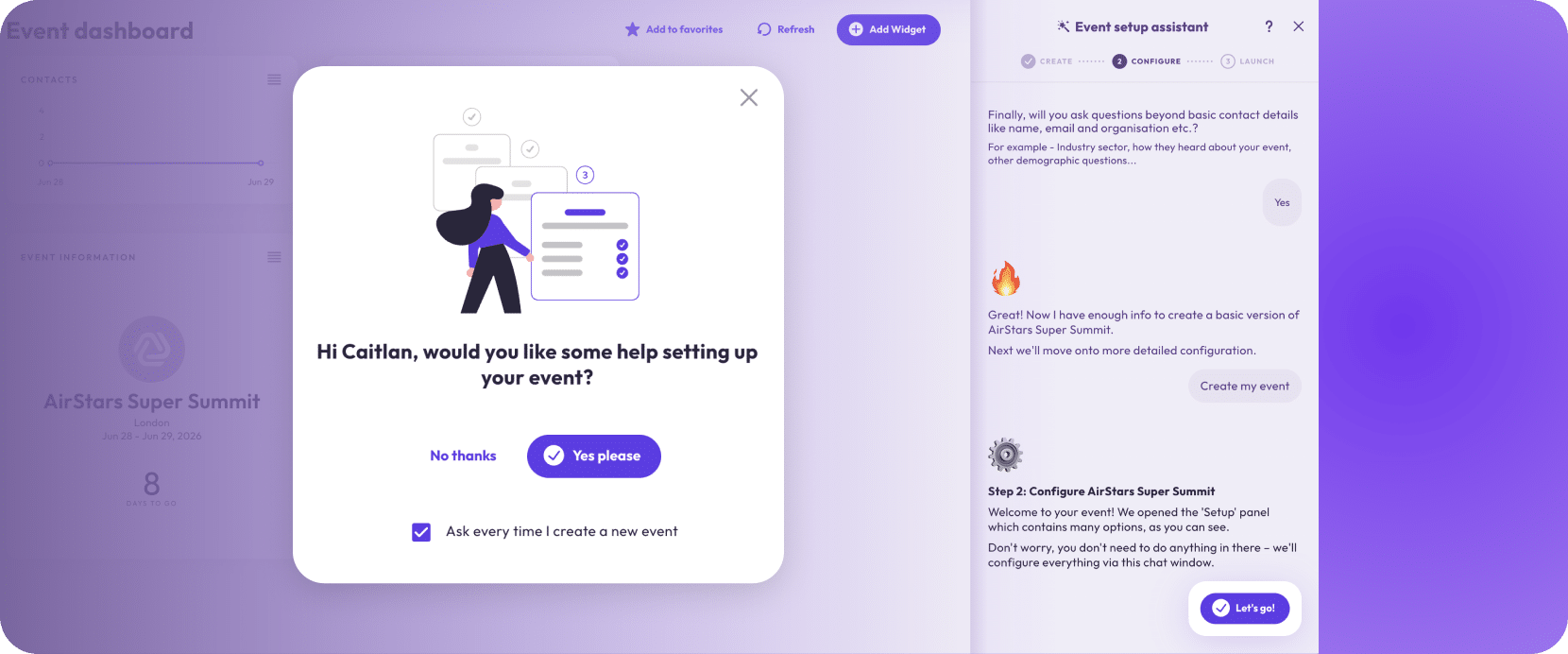
Built around the same best-practice workflow outlined in this article, Event Setup Assistant walks planners through every essential stage of event setup across three clear phases: Create, Configure, and Launch. Along the way, contextual guidance helps teams establish the right foundations, make informed decisions, and move from event creation to launch more efficiently.
Whether you’re launching a simple event or a complex conference, the goal remains the same: establish the essentials early so you can focus your time and energy on delivering an exceptional event experience.
Setting yourself up for event success
As events become more complex, the pressure on planners to deliver exceptional experiences continues to grow. From sponsorships and speakers to attendee engagement and event technology, there are more moving pieces to manage than ever before.
That’s why having a structured approach to event setup is so important. When the essential foundations are established early, planning becomes less about reacting to challenges and more about creating meaningful experiences for attendees.
Whether you’re planning a small seminar or a large-scale conference, investing time in the right setup process can help reduce complexity, improve consistency, and create a stronger foundation for success.
Ready to simplify your event setup process? Request a personalized demo to see how EventsAir helps event teams establish strong foundations, streamline planning, and deliver exceptional event experiences.
See EventsAir in action
Discover why 12,000+ event professionals trust EventsAir to deliver effortless events, every time.



Ready to transform event chaos into clarity?
With EventsAir, you’ll move from chasing logistics to creating unforgettable moments. Plan faster, act with confidence, and deliver exceptional events. Discover what’s possible with a personalized demo today.