

How to Create an Event Marketing Plan


You've booked the venue, confirmed the speakers, and mapped out the agenda. But without a solid marketing plan, even the best-designed event can end up with empty seats.
An event marketing plan is your promotional roadmap. It defines who you're targeting, what you're saying, where you're saying it, and when. Without one, marketing becomes reactive. You're posting when you remember, emailing when it feels urgent, and hoping the right people see it.
Hope isn't a strategy.
This guide walks through how to build an event marketing plan from scratch. We'll cover goal setting, audience research, channel selection, content creation, and measurement.
What is an event marketing plan?
An event marketing plan is a documented strategy that outlines how you'll promote your event from announcement through post-event follow-up.
It typically includes:
- Target audience profiles
- Key messages and positioning
- Marketing channels and tactics
- Content calendar and timeline
- Budget allocation
- Success metrics and KPIs
Ultimately, a solid plan means knowing exactly what you're posting, when, to whom, and why. The plan keeps your team aligned and your efforts focused on what actually drives registrations.
Why you need an event marketing plan
- Prevents last-minute scrambling: A timeline with assigned responsibilities means nothing falls through the cracks.
- Focuses your budget: Know exactly where your marketing dollars are going and why.
- Improves targeting: Document your audience so every message speaks to the right people.
- Enables measurement: Define KPIs upfront so you can actually evaluate what worked.
- Aligns your team: Everyone knows the plan, the timeline, and their role in execution.
How to create an event marketing plan
1. Define your event goals and KPIs
Start with what success looks like. Vague goals like "get more attendees" don't help you make decisions.
Use the SMART framework:
| Element | Example |
| Specific | Increase conference attendance |
| Measurable | By 25% compared to last year |
| Achievable | Based on venue capacity and historical data |
| Relevant | Supports our goal of growing community engagement |
| Time-bound | By event date (October 15) |
Common event marketing KPIs:
- Registration numbers (total, by source, by ticket type)
- Email open and click-through rates
- Social media engagement and reach
- Website traffic to event pages
- Cost per registration
- Attendee satisfaction scores
Document these upfront. You'll reference them throughout planning and use them to evaluate performance afterward.
2. Identify your target audience
Generic marketing attracts generic results. The more specific you get about who you're targeting, the more effective your messaging becomes.
Build audience profiles that include:
- Demographics: Job titles, industries, company sizes, locations
- Psychographics: Goals, challenges, motivations, objections
- Behavioral data: Past event attendance, content engagement, purchase history
For returning events, mine your registration data. Which attendee segments had the highest satisfaction scores? Which converted best from marketing campaigns? Double down on those.
For new events, interview potential attendees. Ask what would make them register, what would make them hesitate, and where they go for industry information.
3. Craft your core messaging
Your messaging should answer one question from the attendee's perspective: "Why should I care?"
Start with your event's unique value proposition. What makes this event worth someone's time and money?
Then build out:
- Primary message: The single most compelling reason to attend (use this everywhere)
- Supporting messages: Secondary benefits that reinforce the primary message
- Proof points: Evidence that backs up your claims (speakers, past results, testimonials)
Keep messaging consistent across channels but adapt the format. A LinkedIn post needs different framing than an email subject line, even if the core message is the same.
4. Select your marketing channels
Not every channel deserves your attention. Focus on where your audience actually spends time.
Email marketing
Still the highest-ROI channel for event promotion. Use it for:
- Save-the-date announcements
- Registration confirmations and reminders
- Speaker and session highlights
- Last-chance deadlines
Segment your lists. Past attendees get different messaging than prospects. VIPs get different messaging than general registrants.
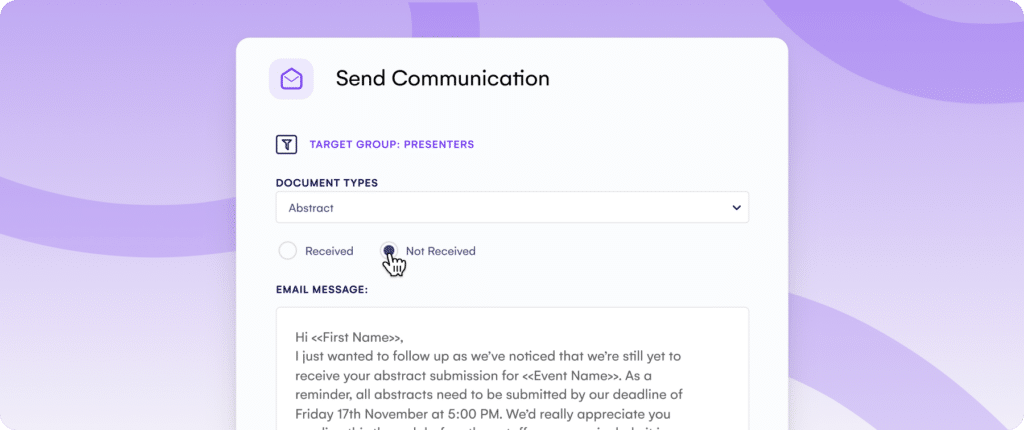
EventsAir's email campaign tools let you build targeted campaigns and track engagement metrics directly within the platform, so you're not juggling separate email systems.
Social media
Choose platforms based on audience, not habit:
- LinkedIn for B2B and professional events
- Instagram for visual, experiential events
- Twitter/X for industry conversations and live updates
- Facebook for community-driven and local events
Create a content mix: announcements, speaker spotlights, behind-the-scenes content, attendee testimonials, and countdown posts.
Paid advertising
Use paid channels to extend reach beyond your owned audience:
- Retargeting ads for website visitors who didn't register
- Lookalike audiences based on past attendees
- Search ads for high-intent keywords
- Sponsored content on industry publications
Start small, measure results, and scale what works.
Content marketing
Blog posts, videos, and podcasts build interest over time:
- Interview speakers on topics they'll cover
- Publish research or insights related to event themes
- Create "what to expect" content for first-time attendees
Partner and sponsor channels
Leverage your sponsors and partners for extended reach:
- Co-branded email sends to their lists
- Social media cross-promotion
- Inclusion in their newsletters or content
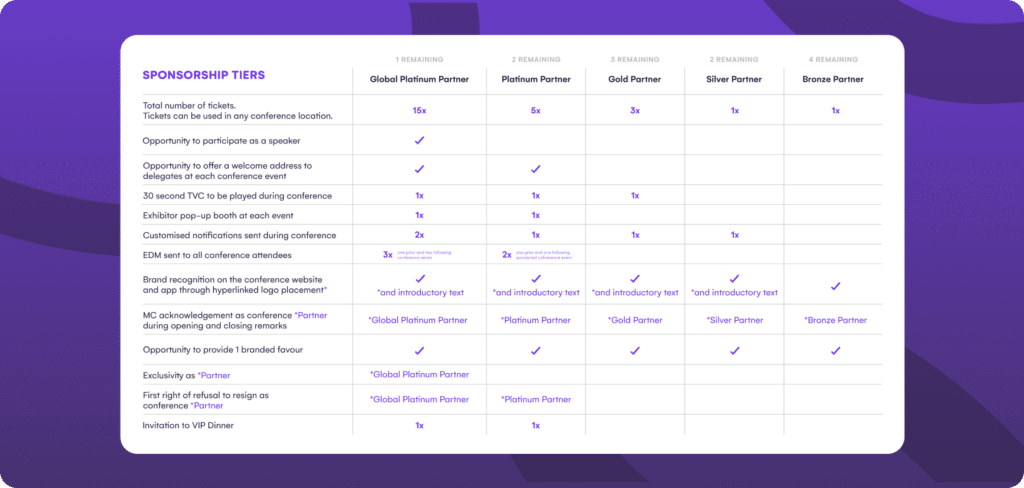
We recommend building this into sponsorship packages so expectations are clear.
5. Build your marketing timeline
A timeline prevents the "we should have started promoting earlier" regret. Work backward from your event date.
Sample timeline for a major conference:
| Timeframe | Activities |
| 6+ months out | Finalize branding and messaging. Launch event website. Open early bird registration. Begin sponsor outreach. |
| 4-6 months out | Launch email campaigns to past attendees and prospects. Begin social media promotion. Announce speakers as confirmed. Activate paid advertising. |
| 2-4 months out | Ramp up content marketing (speaker interviews, session previews). Partner cross-promotion. Attendee testimonials from past events. |
| 1-2 months out | Deadline-driven campaigns (early bird ending, limited spots). Final speaker announcements. Practical content (what to bring, schedule preview). |
| Final 2 weeks | Last-chance messaging. Logistics communications. Mobile app promotion. Social proof (registration numbers, attendee excitement). |
Adjust timing based on your event size and sales cycle. A local workshop needs a shorter runway than an international conference.
EventsAir's event website builder and registration system let you launch quickly and track registrations in real time, so you know exactly how campaigns are performing against your timeline.
6. Create your content calendar
A content calendar turns your timeline into specific, assignable tasks.
For each piece of content, document:
- Publication date
- Channel (email, LinkedIn, blog, etc.)
- Content type (announcement, testimonial, deadline reminder)
- Owner (who's creating it)
- Status (planned, in progress, published)
Batch similar content together. If you're interviewing speakers for blog posts, record short video clips at the same time for social media.
Leave room for real-time content. Milestone announcements ("We just hit 500 registrations!"), trending industry topics, and attendee-generated content keep your feed fresh.
7. Set your budget
Your marketing budget determines what's possible. Allocate it strategically based on expected returns, not habit. Here are a few ways you can tackle this:
a. Determining your total budget
There's no universal rule, but common approaches include:
- Percentage of expected revenue: 15-25% of projected ticket sales is typical for events where registration is the primary revenue driver
- Cost-per-acquisition target: If you know your target CPA (say, $50 per registrant), multiply by your registration goal
- Historical baseline: Start with last year's spend, then adjust based on goals and what worked
For new events without historical data, benchmark against similar events in your industry or start conservative and scale up as you see results.
Need a framework to organize your numbers? EventsAir's free event budget template covers marketing alongside venue, catering, staffing, and other major cost categories.
b. Budget allocation by channel
How you split the budget depends on your audience and goals. Here's a starting framework:
| Channel | Typical allocation | Best for |
| Paid advertising | 30-40% | Reaching new audiences, retargeting warm prospects |
| Content production | 20-30% | Video, photography, graphic design, copywriting |
| Email marketing | 10-15% | Platform costs, list growth, automation tools |
| Event website | 10-15% | Design, development, hosting, SEO |
| Partner/influencer | 5-10% | Paid promotions, affiliate commissions, co-marketing |
| Contingency | 10-15% | Unexpected opportunities, underperforming channels |
c. Tracking and adjusting spend
Set up tracking from day one:
- Use UTM parameters on all campaign links
- Track cost per registration by channel and campaign
- Review performance weekly and reallocate from underperforming channels
- Keep 10-15% in reserve for scaling what works
The goal isn't to spend your budget. It's to hit your registration targets as efficiently as possible. If you're ahead of pace, bank the savings or reinvest in post-event marketing. If you're behind, diagnose before spending more.
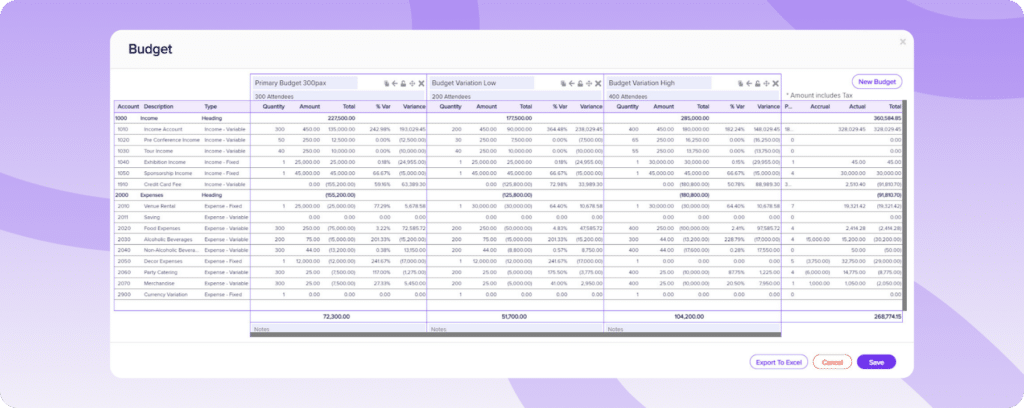
EventsAir's built-in budget tools let you monitor planned vs. actual spend in real time. You can set budget limits by category, track expenses as they're incurred, and generate reports that show exactly where your money went. No more end-of-event surprises or reconciling multiple spreadsheets.
8. Execute and optimize
Launch your campaigns according to the timeline, but stay flexible.
Monitor these metrics weekly (or daily during peak periods):
- Registration pace vs. target
- Email performance (opens, clicks, conversions)
- Ad performance (cost per click, cost per registration)
- Website traffic and conversion rates
- Social engagement and reach
When something's working, amplify it. When something's underperforming, diagnose and adjust. Low email open rates? Test subject lines. High ad clicks but low conversions? Check your landing page.
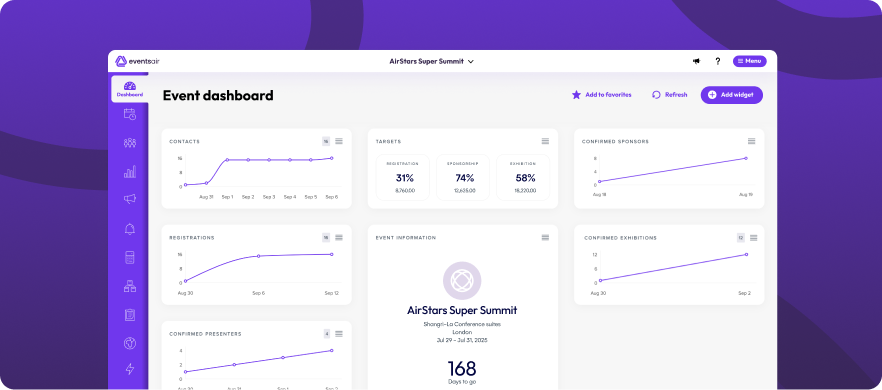
EventsAir's analytics dashboards give you real-time visibility into registration trends and marketing performance, so you can make data-driven adjustments without waiting for post-event reports.
9. Measure and document results
After the event, compile your results against the KPIs you set in step one.
Document:
- What worked (keep doing this)
- What didn't work (stop or fix this)
- What you'd do differently (test this next time)
- Unexpected wins or challenges (learn from these)
This becomes your playbook for the next event. The best event marketers treat every campaign as a learning opportunity.
Build your event marketing engine with EventsAir
A great marketing plan needs great tools to execute it. Disconnected systems create data silos, manual work, and missed opportunities.
EventsAir brings your event marketing together in one platform. Build event websites, manage registrations, send targeted email campaigns, and track performance in real time. No more jumping between tools or reconciling data from multiple sources.
Ready to streamline your event marketing? Get started with EventsAir today.
See EventsAir in action
Discover why 12,000+ event professionals trust EventsAir to deliver effortless events, every time.


Ready to transform event chaos into clarity?
With EventsAir, you’ll move from chasing logistics to creating unforgettable moments. Plan faster, act with confidence, and deliver exceptional events. Discover what’s possible with a personalized demo today.