

Six Sessions, One Space: What Planners Can Learn from a Silent Conference

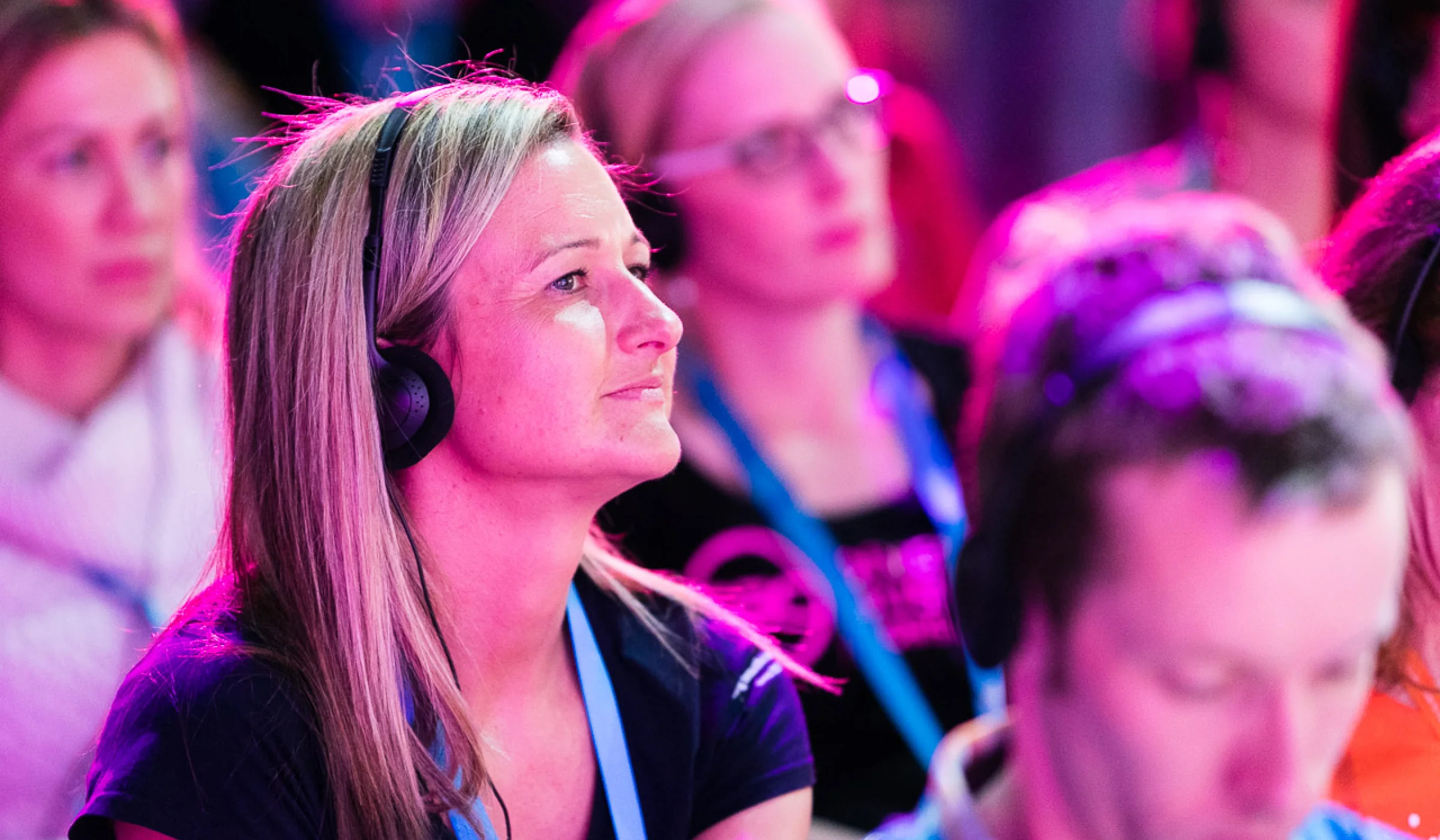
Fitting six presentation zones into one exhibition space is only part of the challenge. The real test comes when delegates arrive: can they find the right session, settle in, and hear clearly? And if they arrive late, can they start listening straight away?
We work alongside Congress Australia at events across the region, and their team recently shared what they’ve learned from running six silent conference zones at ICC Sydney. If you’re planning an exhibition-floor programme, this one is worth a read.
The brief was to reduce delegate movement while allowing separate presentations to operate alongside one another. Delivering it meant thinking beyond audio: where people would sit, how they would access equipment, and what would happen when sessions changed.
For planners considering a silent conference, those details deserve attention early.
What is a silent conference, and when does it make sense?
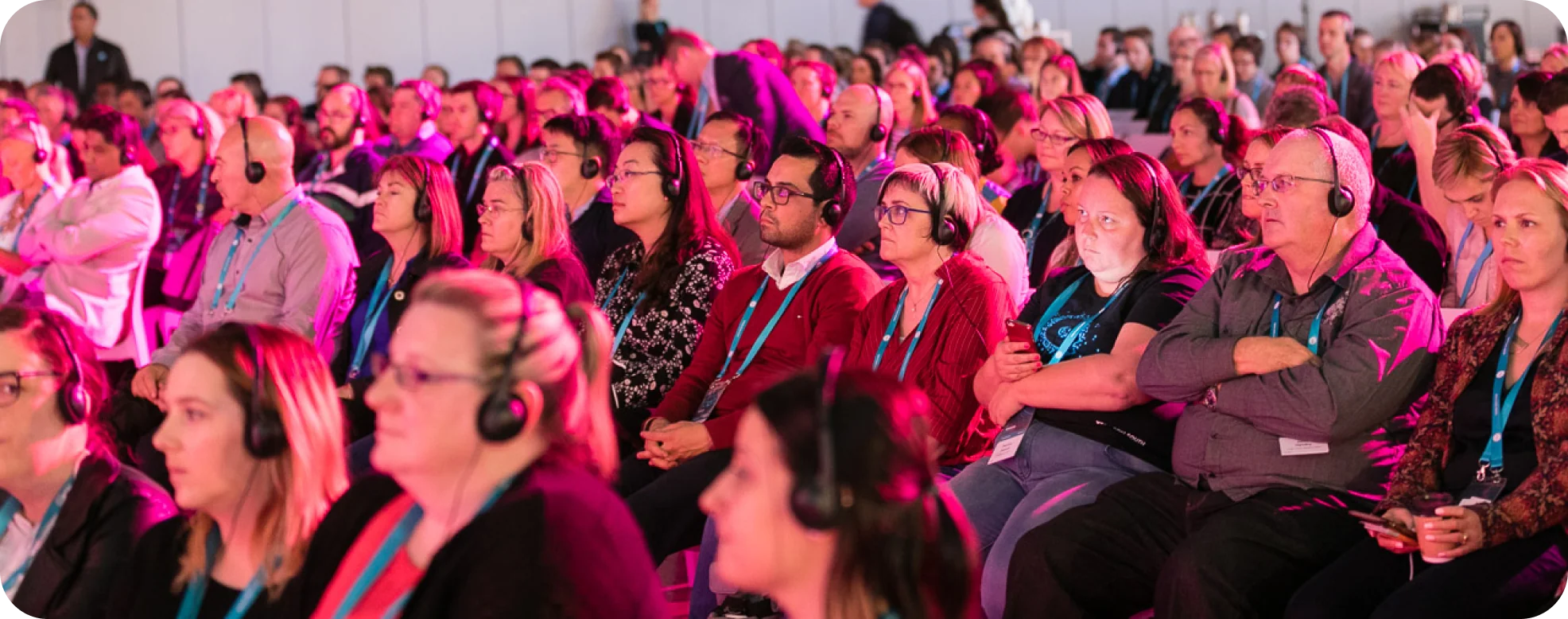
A silent conference delivers presentation audio through headphones, letting different sessions share a space without relying on loudspeakers.
In an infrared system, presenter audio travels from the mixing desk through transmitters and room radiators. Delegates listen through headphones connected to personal receivers.
It can be useful when educational content belongs close to an exhibition, breakout rooms are limited, or popular sessions need overflow seating. Keeping content within the event’s main footprint can also reduce the distance delegates travel between activities.
Congress Australia’s experience with silent conferencing points to one starting question: what experience do you want to create? A presentation with slides and moderated questions has different requirements from a workshop built around conversation.
For discussion-heavy sessions, decide how participants will hear one another, when headphones come off, and how contributions reach the wider audience. Where privacy or sustained group discussion matters, a separate room may serve the session better.
Headphones also leave some distractions untouched. Nearby conversations, passing traffic and competing screens still influence how easy it is to concentrate.
Plan the room from the delegate’s perspective
One planning mistake is treating each zone as a collection of seats and a screen. It needs to function as a complete audience space.
Walk through the layout as someone arriving five minutes late. Can they identify the session before entering? Can they find a seat without crossing in front of the speaker? See the screen from the back?
Place entrances, signs, and assistance points where people naturally approach. Leave enough space for delegates to pause or ask for help without blocking an aisle.
Coverage belongs in this conversation too. At the Sydney event, nearly 50 infrared radiators supported the six zones, with placement planned around the floor layout, truss and audience flow.
The team’s advice is to involve your audio provider while those decisions are still taking shape. A change to staging or seating should prompt a coverage review.
Lessons from Congress Australia’s past events
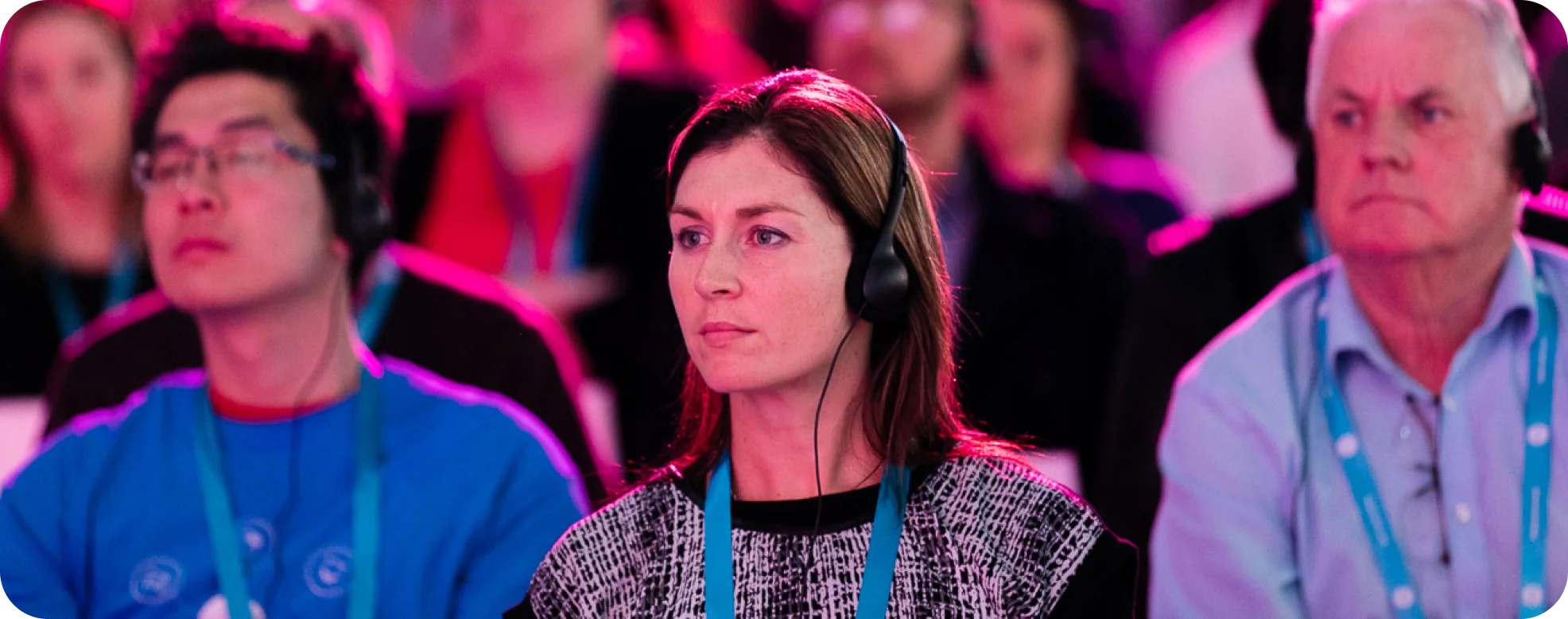
At a major technology conference, the team at Congress Australia secured more than 3,200 headsets to seats before delegates arrived. Every receiver was tested beforehand, and on-site technical support remained available throughout the day.
That distribution decision deserves as much attention as the scale of the installation.
With equipment already at seats, delegates could access it where they would listen. For planners, it is a useful example of how a technical decision shapes the arrival experience.
As the Congress Australia team puts it:
“We want delegates to sit down and feel ready to listen. That means planning access to equipment and support with the same care as the audio itself.”
Pre-positioning will not suit every event. Seating arrangements, security, cleaning and collection requirements all affect the choice. Compare it with staffed distribution before settling on a process.
The broader lesson is to test the whole journey. A successful sound check confirms one part of the experience. Delegates still need to find their session, understand the controls, and reach assistance quickly.

Pay attention to the first few minutes
For a delegate unfamiliar with the format, the first hurdle may be uncertainty about what to do. Clear instructions and visible support help people settle in. During opening sessions, watch where they hesitate. Are they looking for a channel number? Checking whether the receiver is working? Removing their headphones because an audience question is inaudible?
Repeated questions can reveal something worth fixing immediately.
Headphones alone are no measure of engagement. Look at attendance, participation and feedback, and ask whether delegates could follow the content comfortably.
Include accessibility in the initial brief. Discuss different listening needs, equipment compatibility, captions, and any additional support required before choosing the setup.
Questions you should ask before booking
How will you assess coverageagainst the floor plan and check later changes
- How will you assess coverage against the floor plan and check later changes?
- How will delegates collect, use, and return equipment?
- What testing, rehearsal, and on-site support are required?
- How will you accommodate different listening and accessibility needs?
- Who coordinates with the venue and other production suppliers, and handles equipment replacements during sessions?
Ask the provider to walk you through a busy changeover. Their answer should make responsibilities and delegate movements clear.
Bringing it all together
A silent conference works best when planning starts with the delegate. Where will they sit? How will they find their session and their equipment? Who can they ask if something goes wrong in the first few minutes?
Answer those questions early, test the whole journey rather than just the sound, and bring your audio provider in while the floor plan is still taking shape.
Every event is different, so the right setup depends on your programme, your space and your audience.
The team at Congress Australia has more than 20 years’ experience in simultaneous interpretation and conferencing across Australia and the Asia-Pacific, and they’re happy to talk through your floor plan and requirements. You can reach their producers here or email info@congress.com.au to start the conversation.
See EventsAir in action
Discover why 12,000+ event professionals trust EventsAir to deliver effortless events, every time.




Ready to transform event chaos into clarity?
With EventsAir, you’ll move from chasing logistics to creating unforgettable moments. Plan faster, act with confidence, and deliver exceptional events. Discover what’s possible with a personalized demo today.